Bridging the ESG Purpose Gap


Enterprise SaaS
Concept
Web Application
Location
Savannah, GA
Role
UX Designer / UX Researcher
Year
2021
Duration
~4 months
Users
Zillennial employees at large US tech companies
Problem
ESG strategy was failing at the last mile.
ESG strategy was failing at the last mile. Organizations had the reports and the commitments. What they lacked was a participation layer — a way for employees to see how their daily work connected to sustainability goals. ESG lived at the executive level. Employees never felt it.
Solution
A system designed for participation, not just compliance.
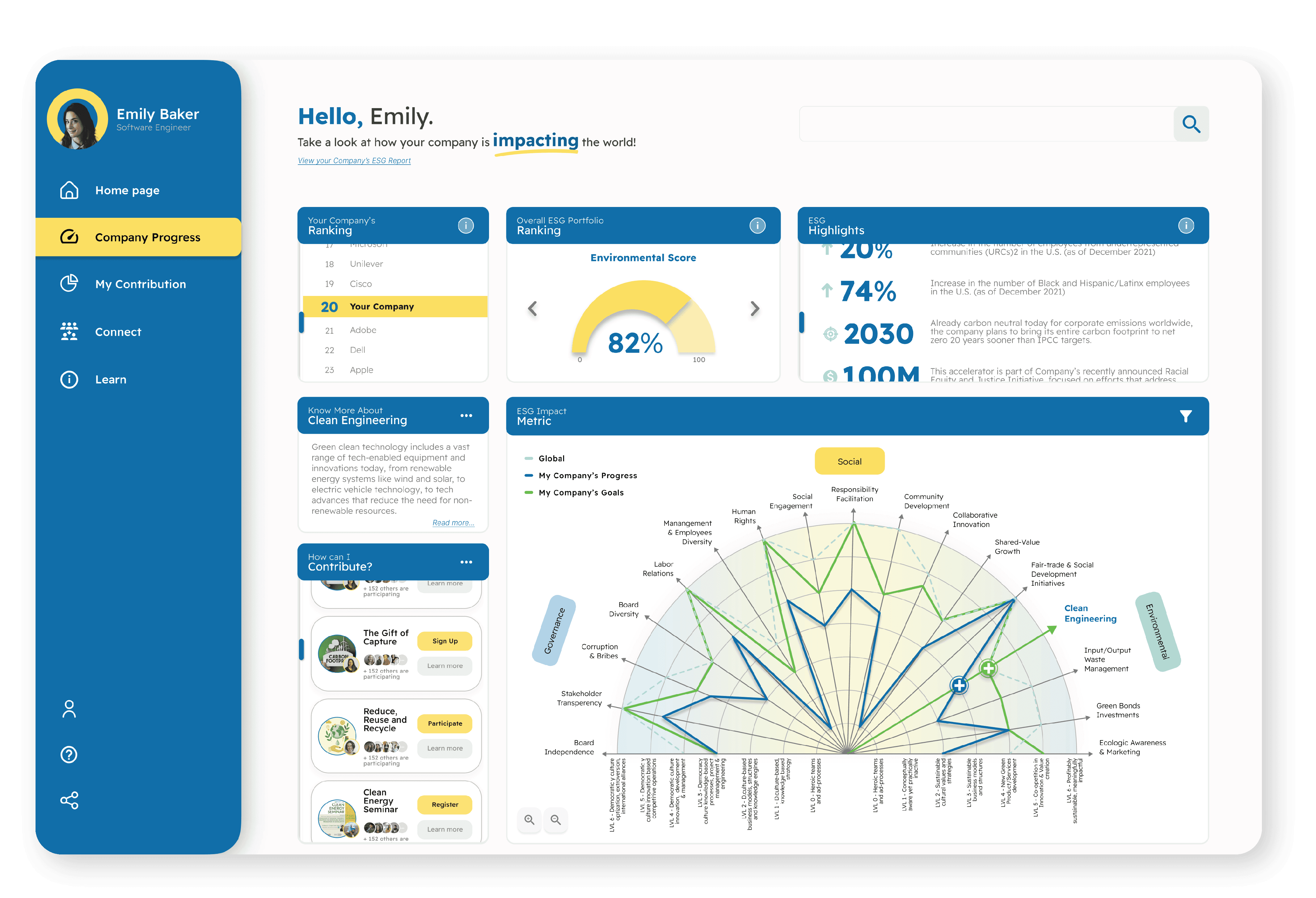
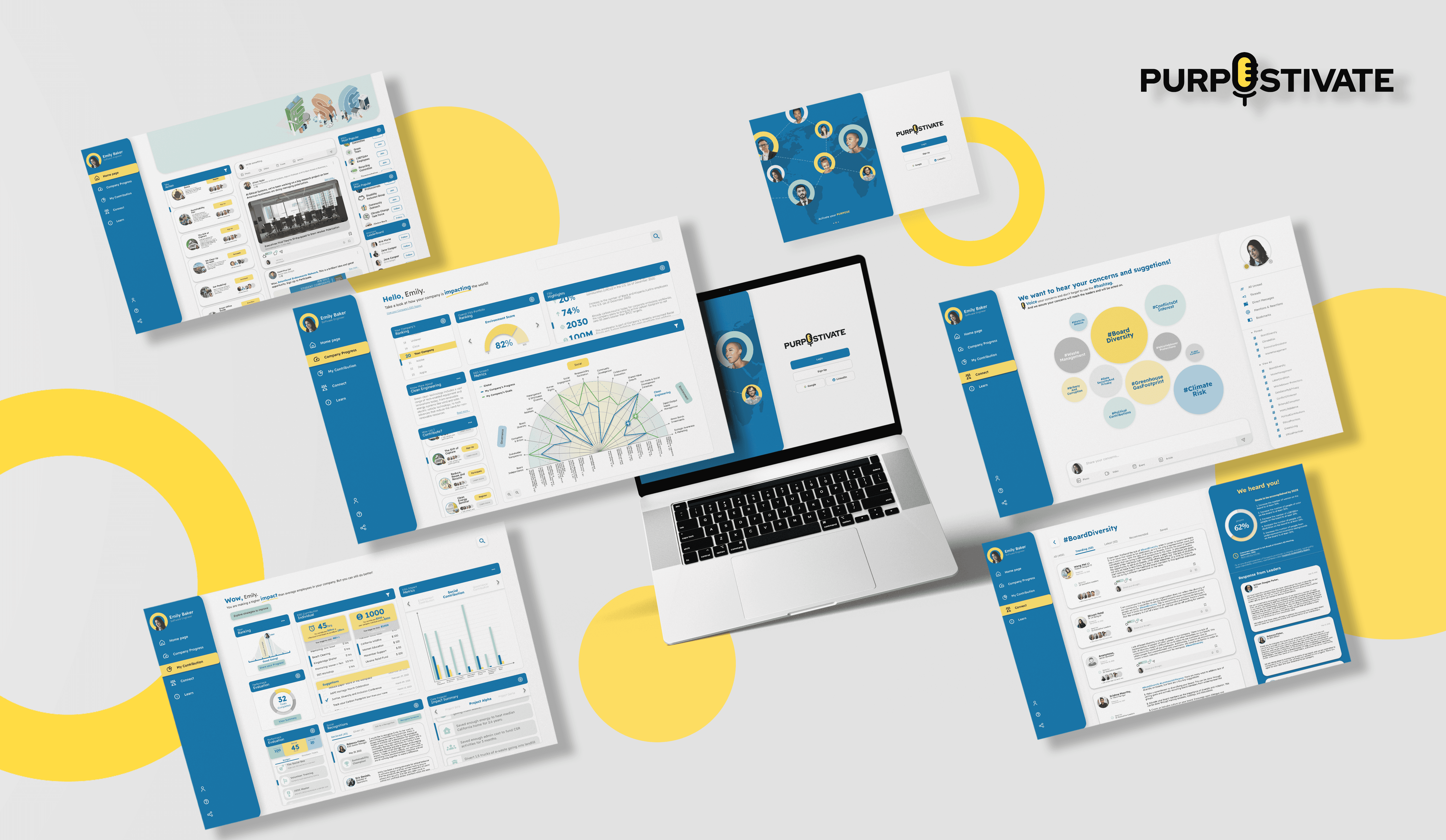
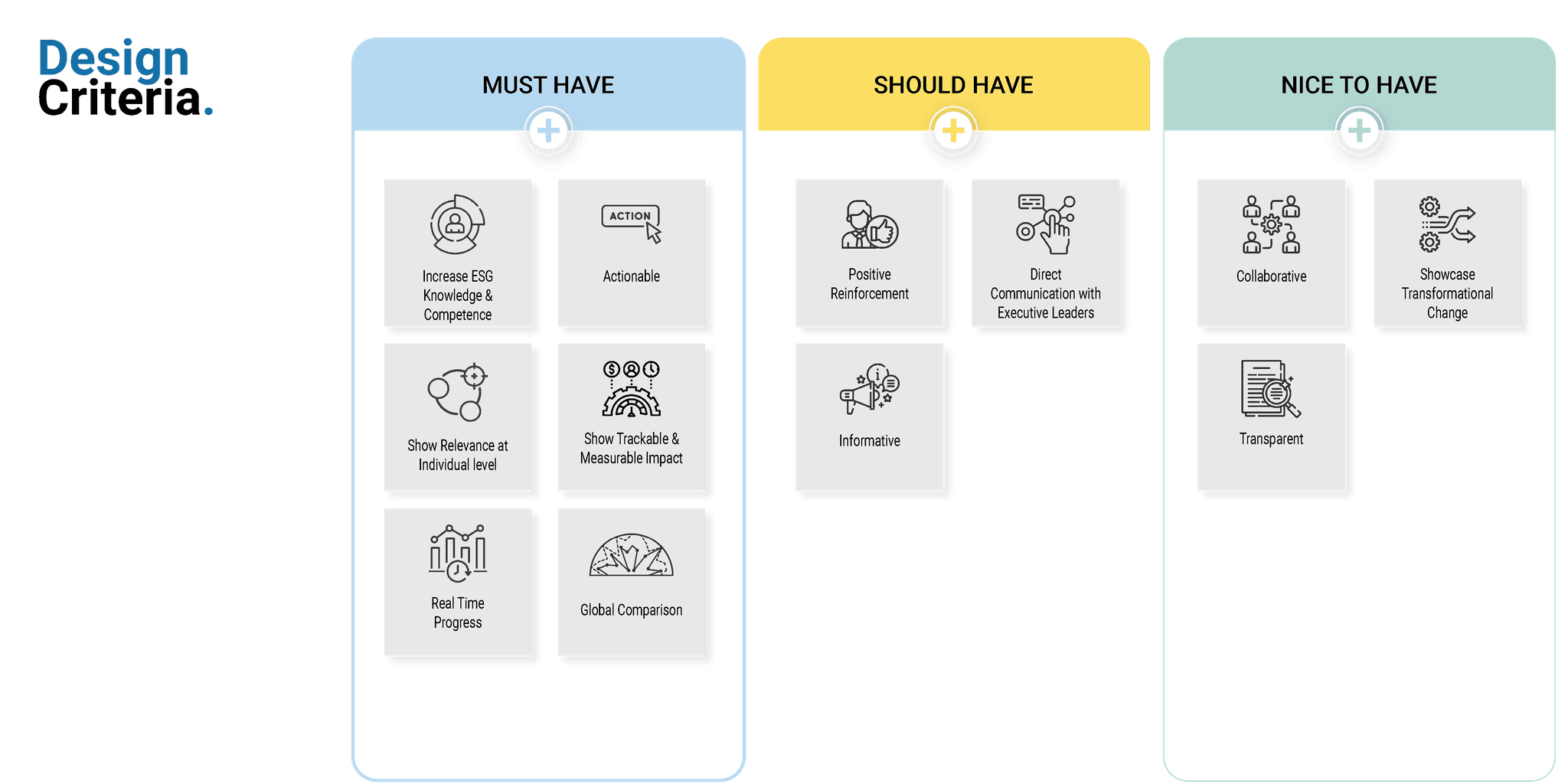
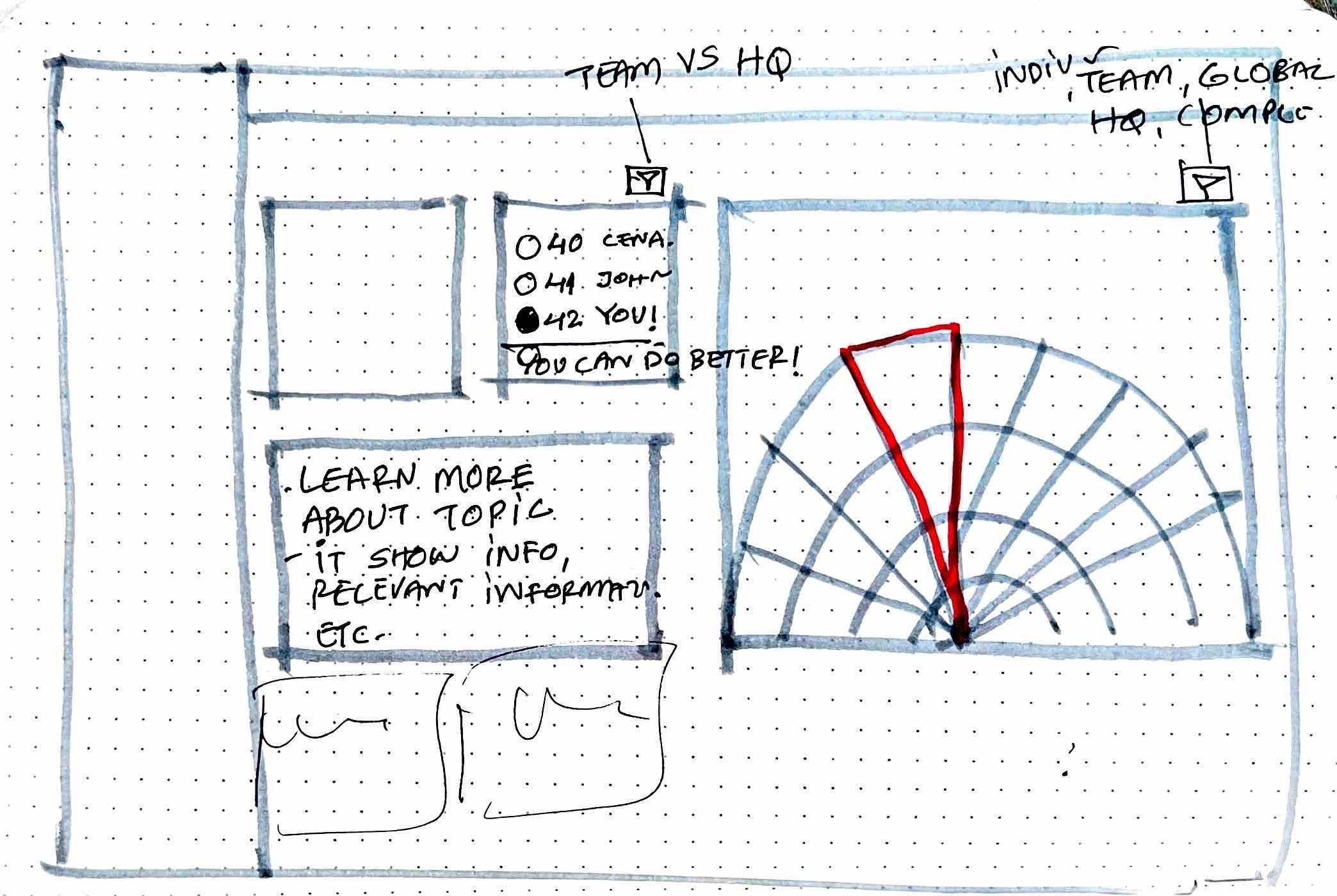
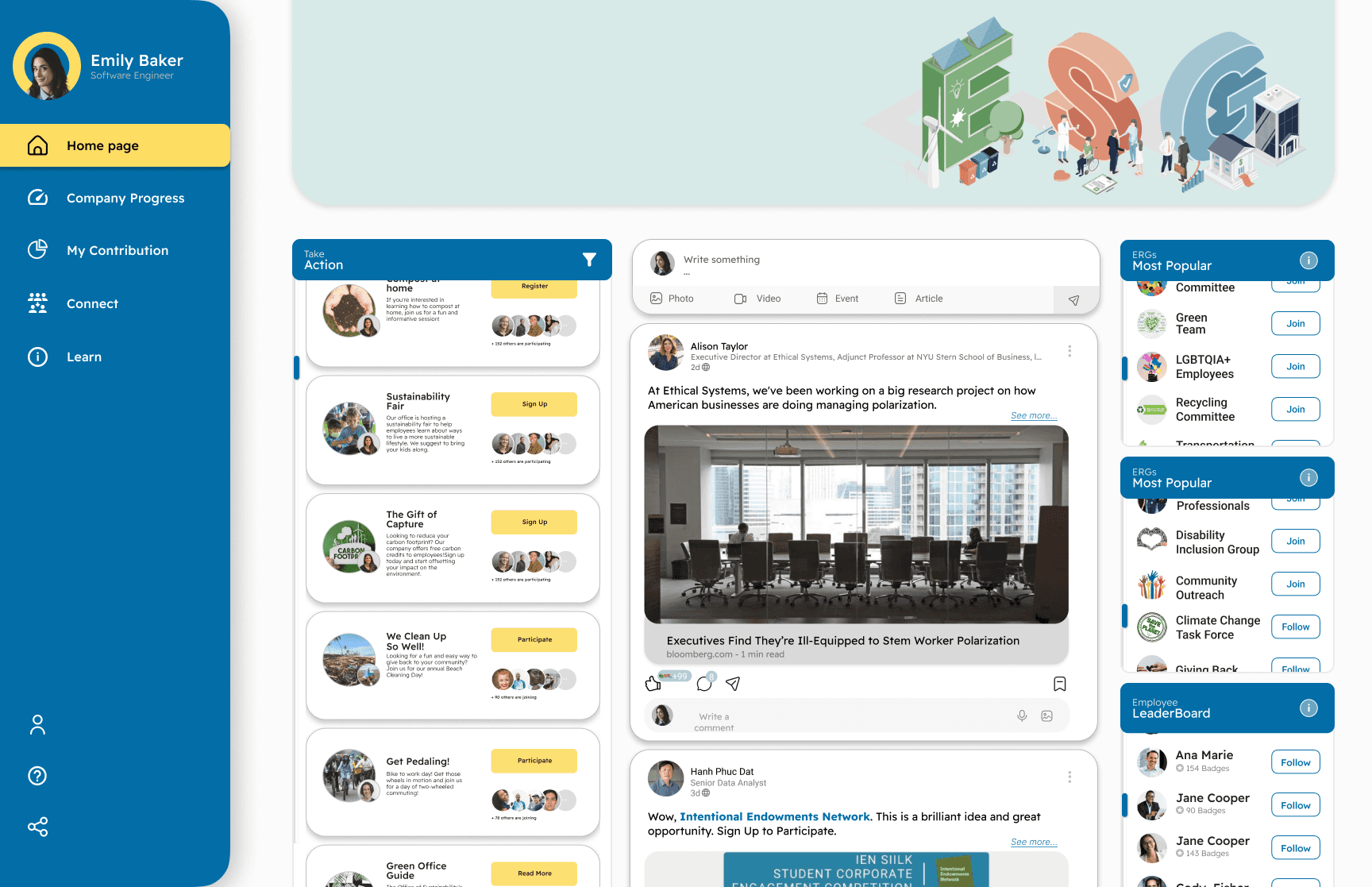
An intranet platform built on three modules: Progress for ESG visibility; My Contribution to make individual impact tangible; and Connect to give employees a direct voice in ESG prioritization.
Impact
Validated by employees. Built for the majority who weren't asking for help yet
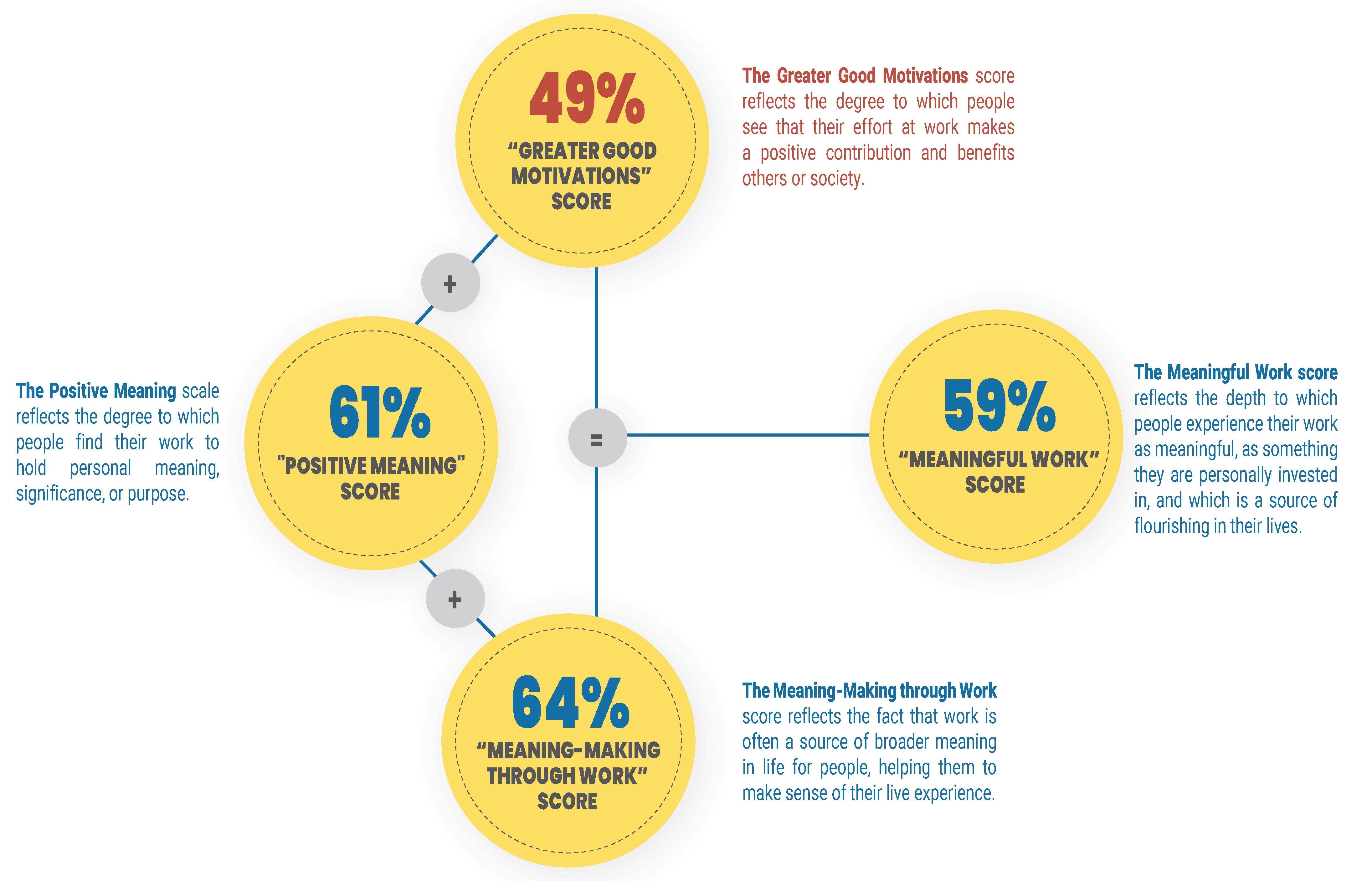
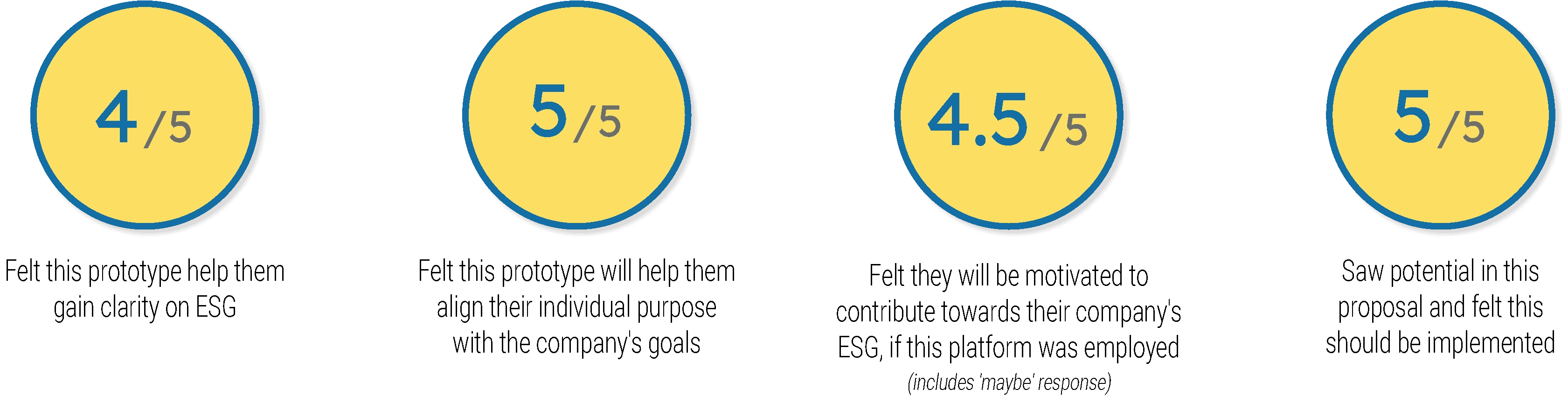
Concept testing rated the prototype 4–5/5 across clarity, purpose alignment, and motivation to contribute. A WAMI survey of 50+ employees — where "Greater Good Motivations" scored just 49% — made the case for why the system needed to exist.

What happens when ESG strategy exists at the top — but not in everyday work?
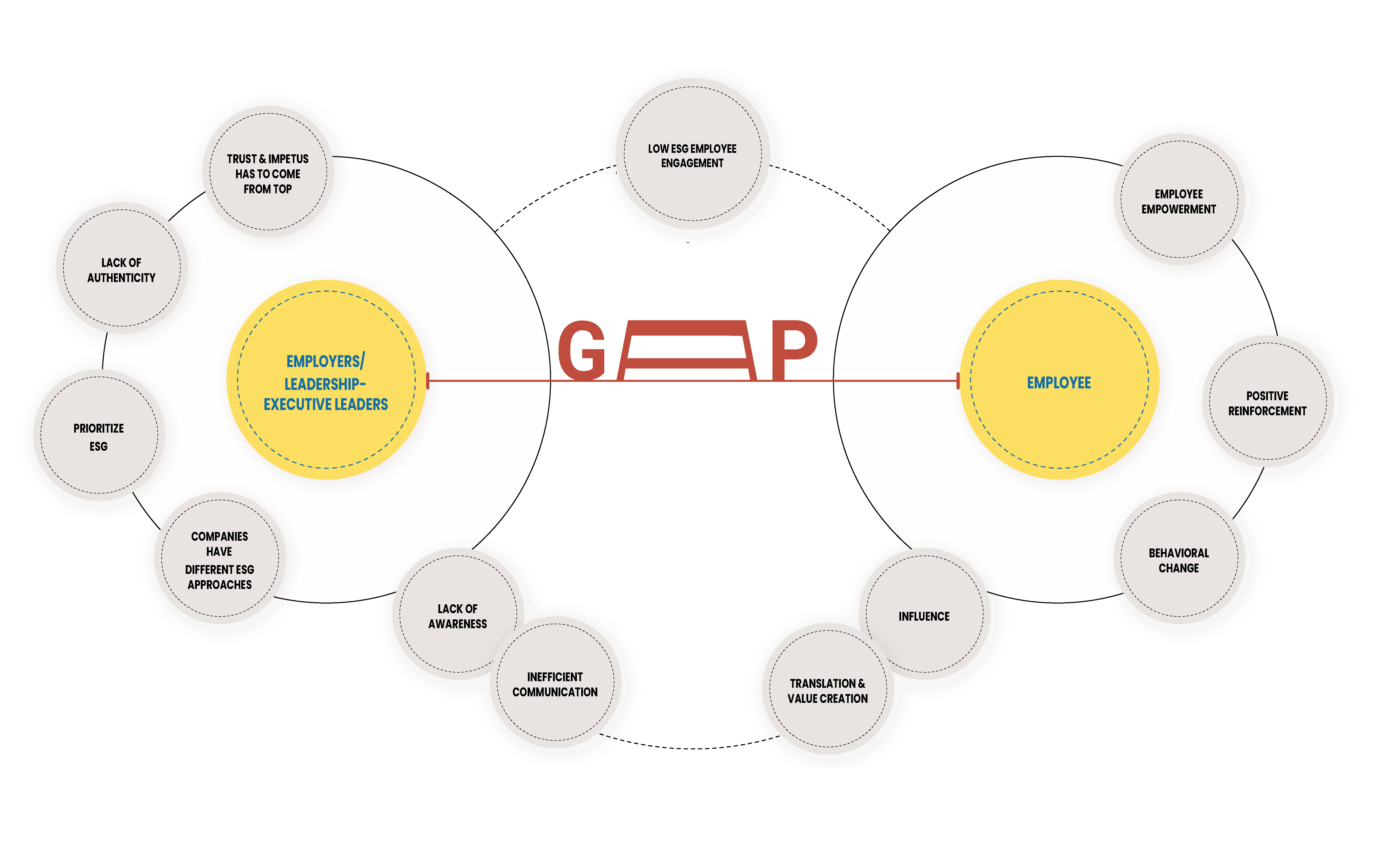
Purpose Is Simply Not "Tickling Down" Through The Layers Of U.S. Companies
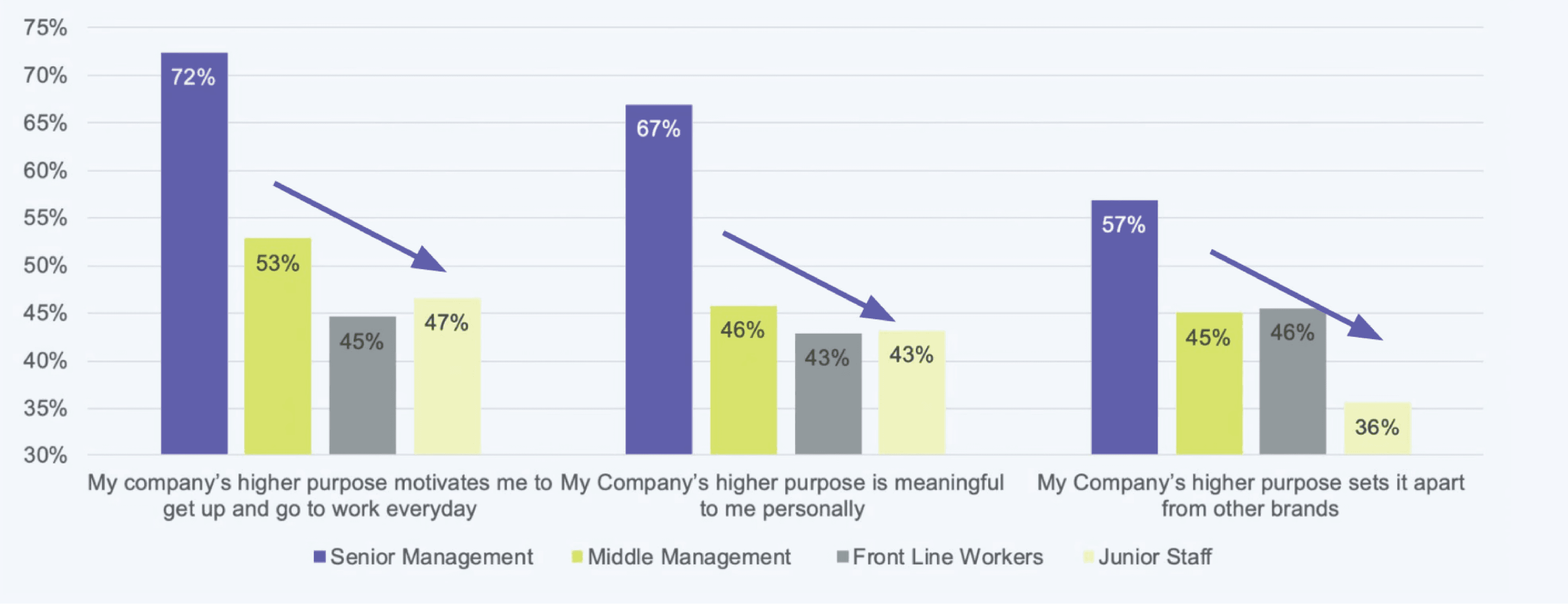
Three Reasons Why This Is Happening
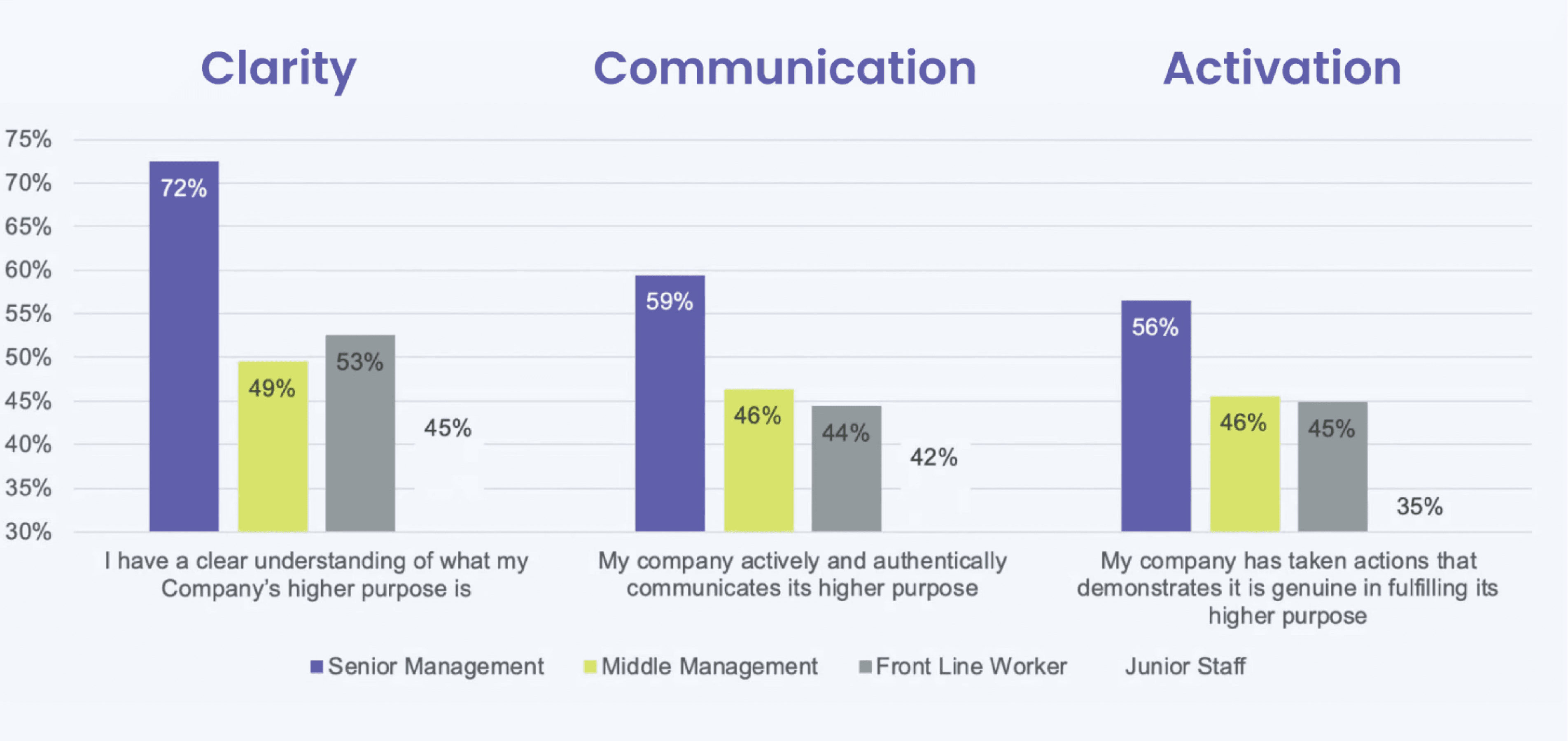
Purpose, Job Satisfaction & Employee Engagement Are Correlated
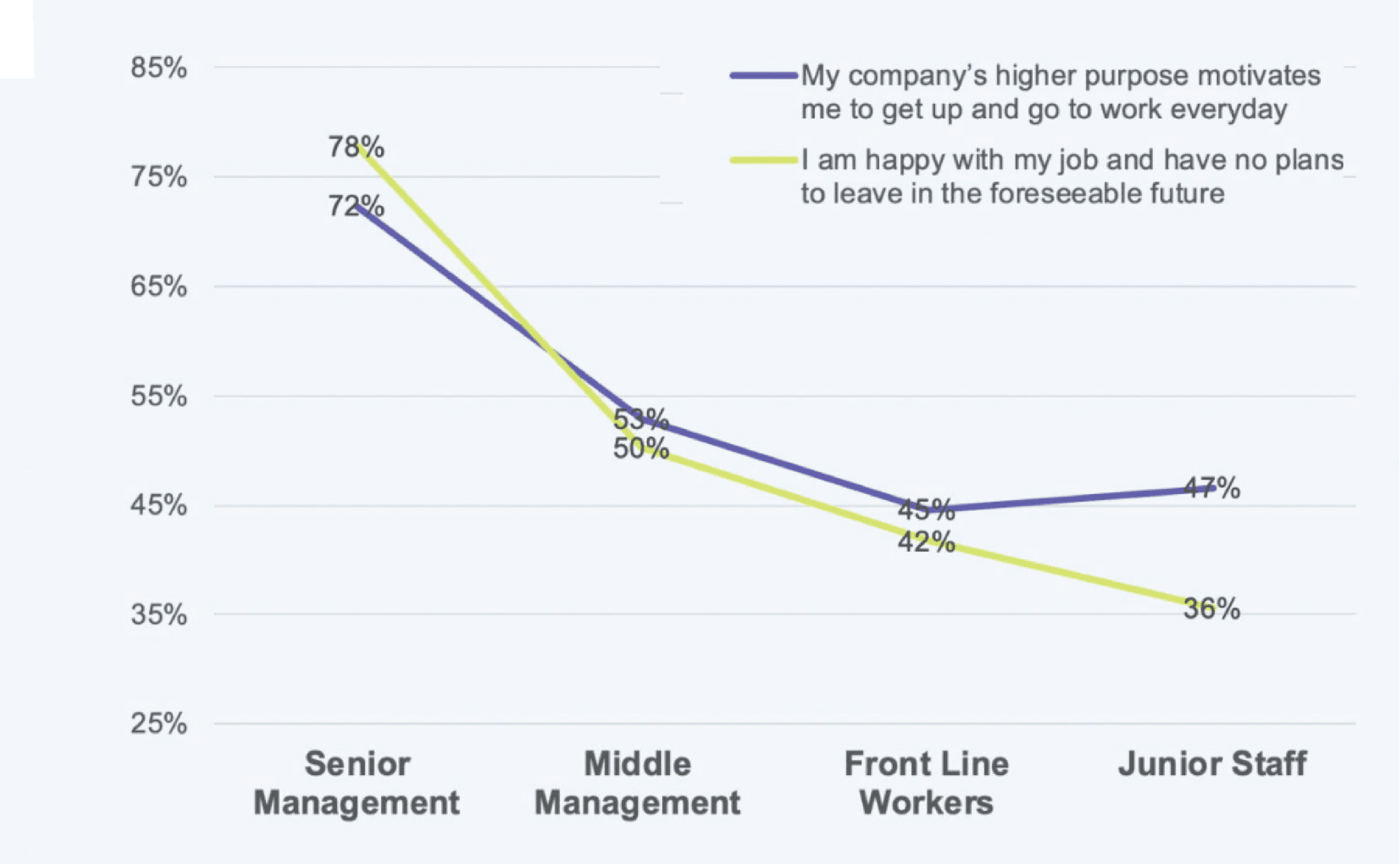
Secondary Research Findings
-StrawberryFrog & Dyanata, 2022
Because ESG was communicated strategically — not experienced operationally. Organizations defined impact through goals and reports. Employees interacted with systems optimized for execution, not meaning. The two layers rarely intersected.
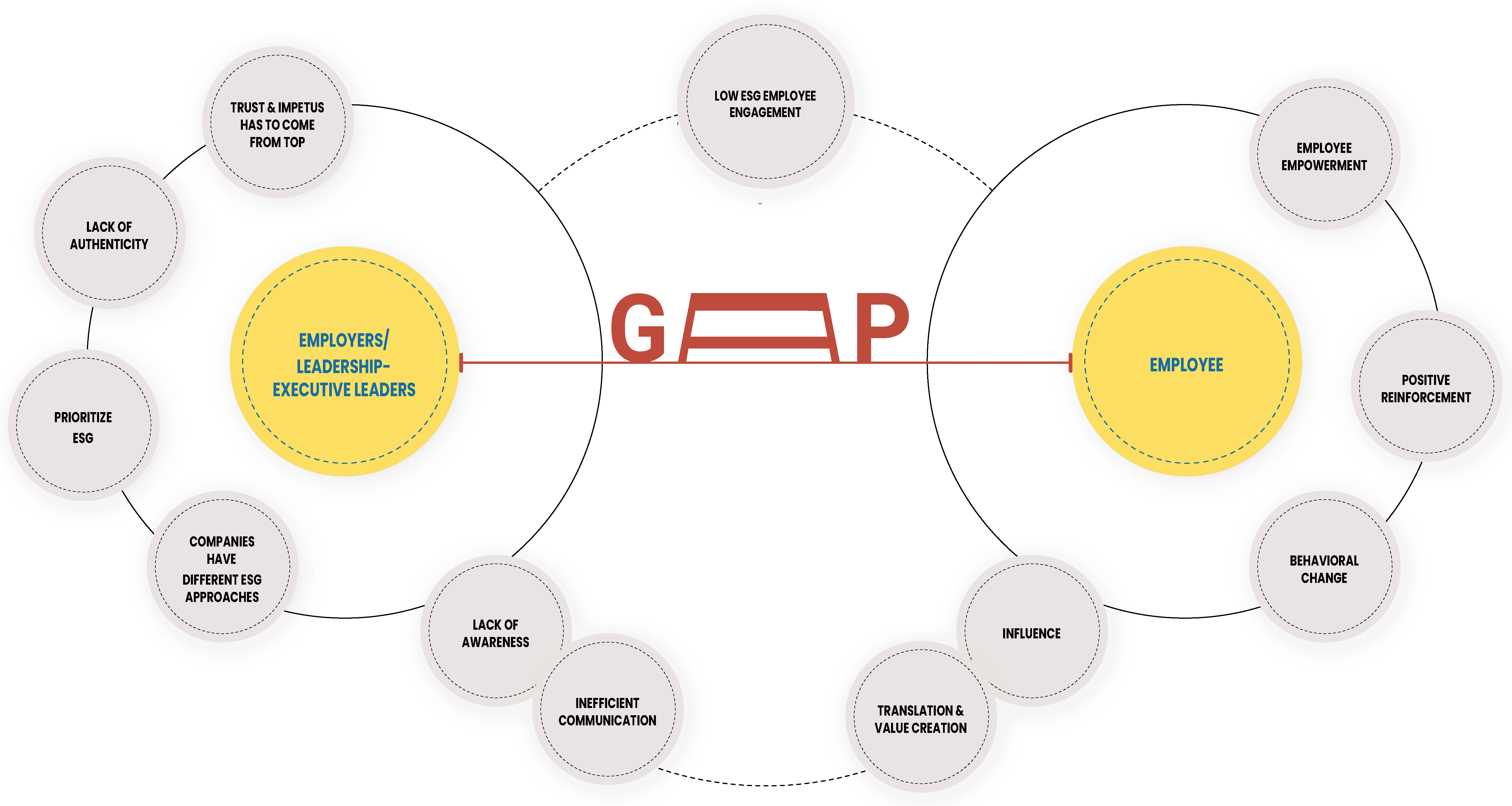
This created what I defined as the ESG Purpose Gap — the disconnect between organizational intent and individual experience.
This reframed the challenge:
" height="52px" id="BnAyXwoCZ" transform="translate(0.775 0)" width="39.45138888888885px"/></svg>)
" height="52px" id="nyRzCyCpQ" transform="translate(1.135 0)" width="38.72916669639993px"/></svg>)
" width="85px"><path d="M 0 0 L 85 0" fill="transparent" height="1px" id="ZZ0YDUfR2" stroke-dasharray="" stroke-linecap="round" stroke-linejoin="round" stroke-width="0.34" stroke="rgb(190, 64, 7)" transform="translate(0 1.089)" width="85px"/><path d="M 0 0 L 0 2.266 M 85 0 L 85 2.266" fill="transparent" height="2.2659952694692413px" id="fLsYKL4AK" stroke-dasharray="" stroke-linecap="round" stroke-linejoin="round" stroke-width="0.5" stroke="rgb(190, 64, 7)" transform="translate(0 0)" width="85px"/></g></svg>)
How do you investigate something as abstract as purpose?
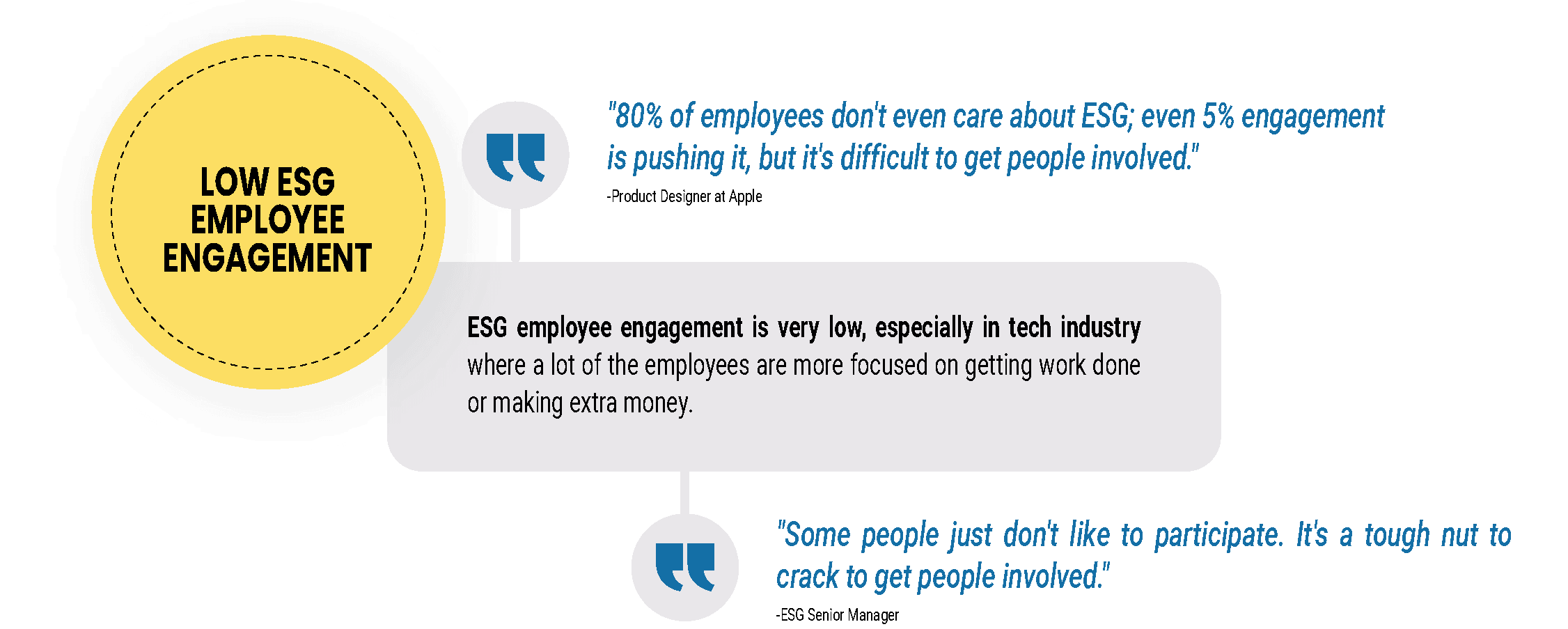
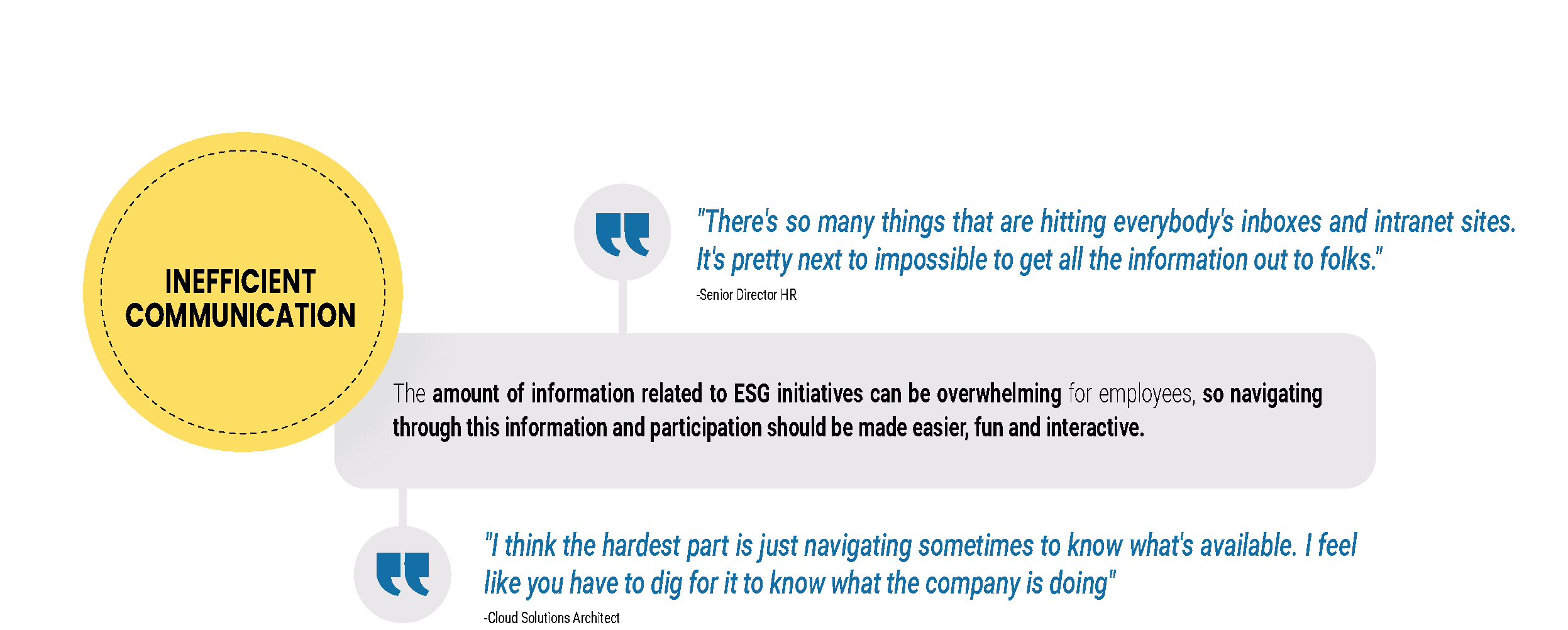
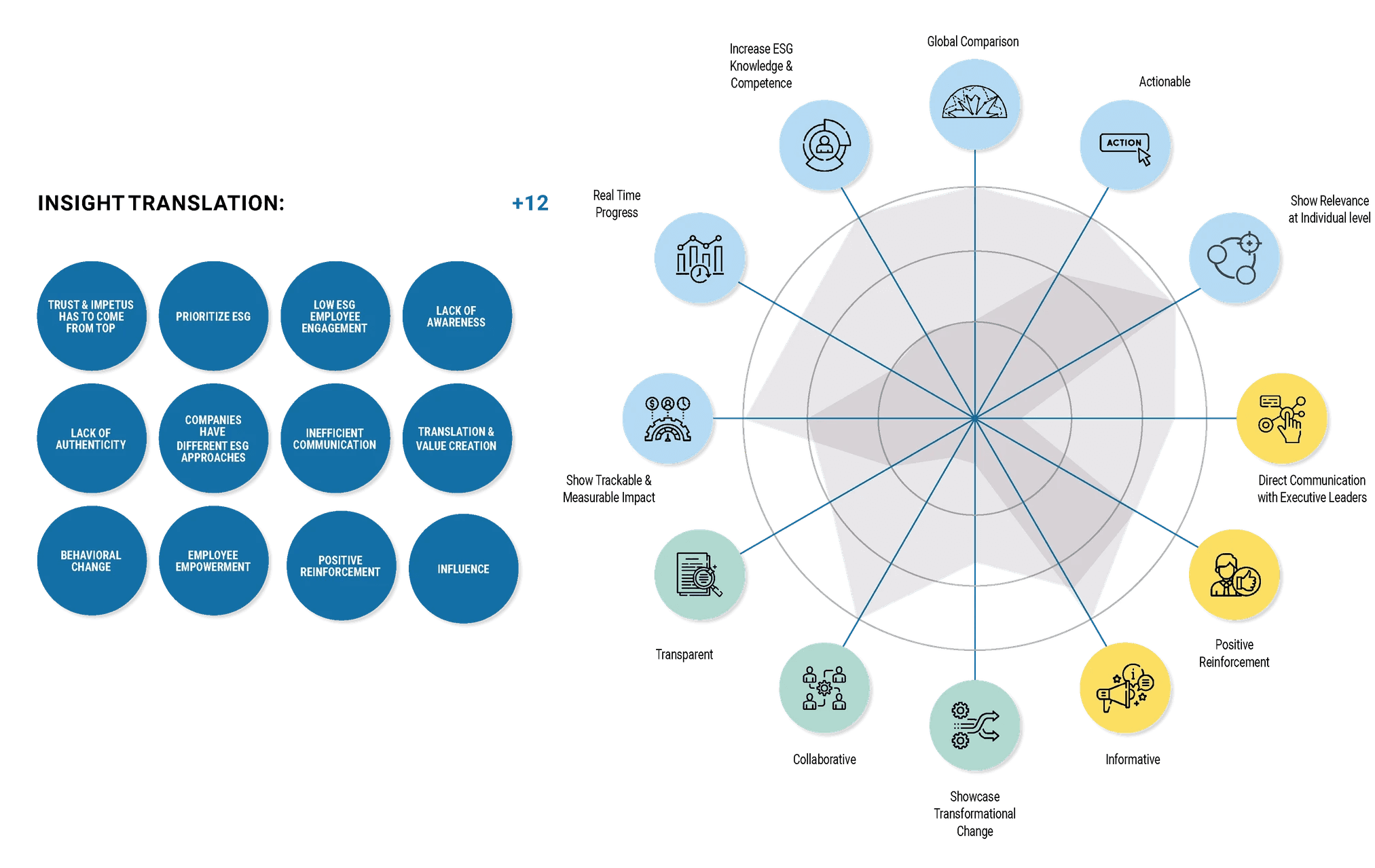
I ran a WAMI (Work and Meaning Inventory) survey with 50+ Zillennial employees, conducted 9 in-depth interviews across ESG leads, HR directors, managers, and individual contributors, and affinitized ~1,000 data points into 12 key insights. The goal wasn't to confirm the problem — it was to find out what was actually causing it.
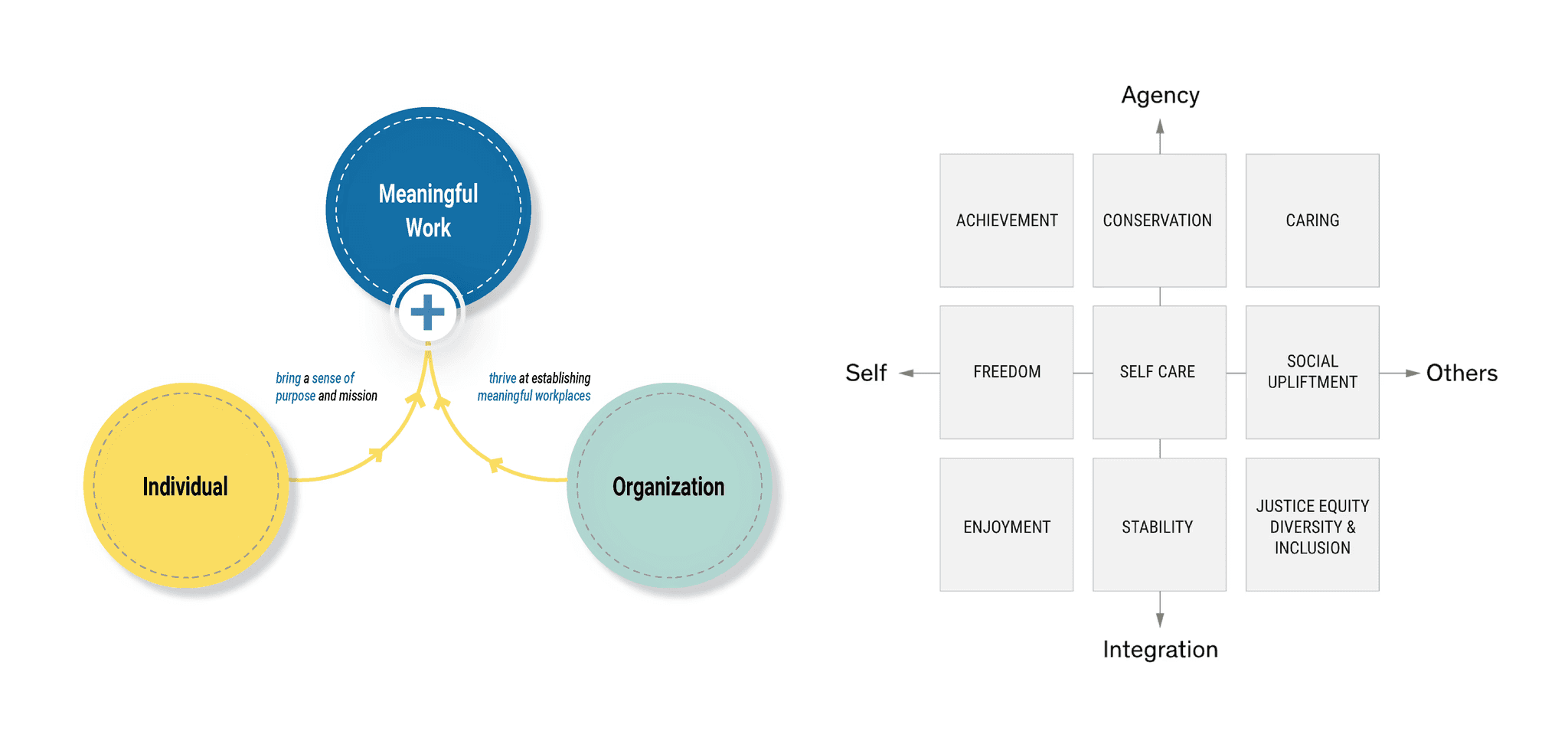
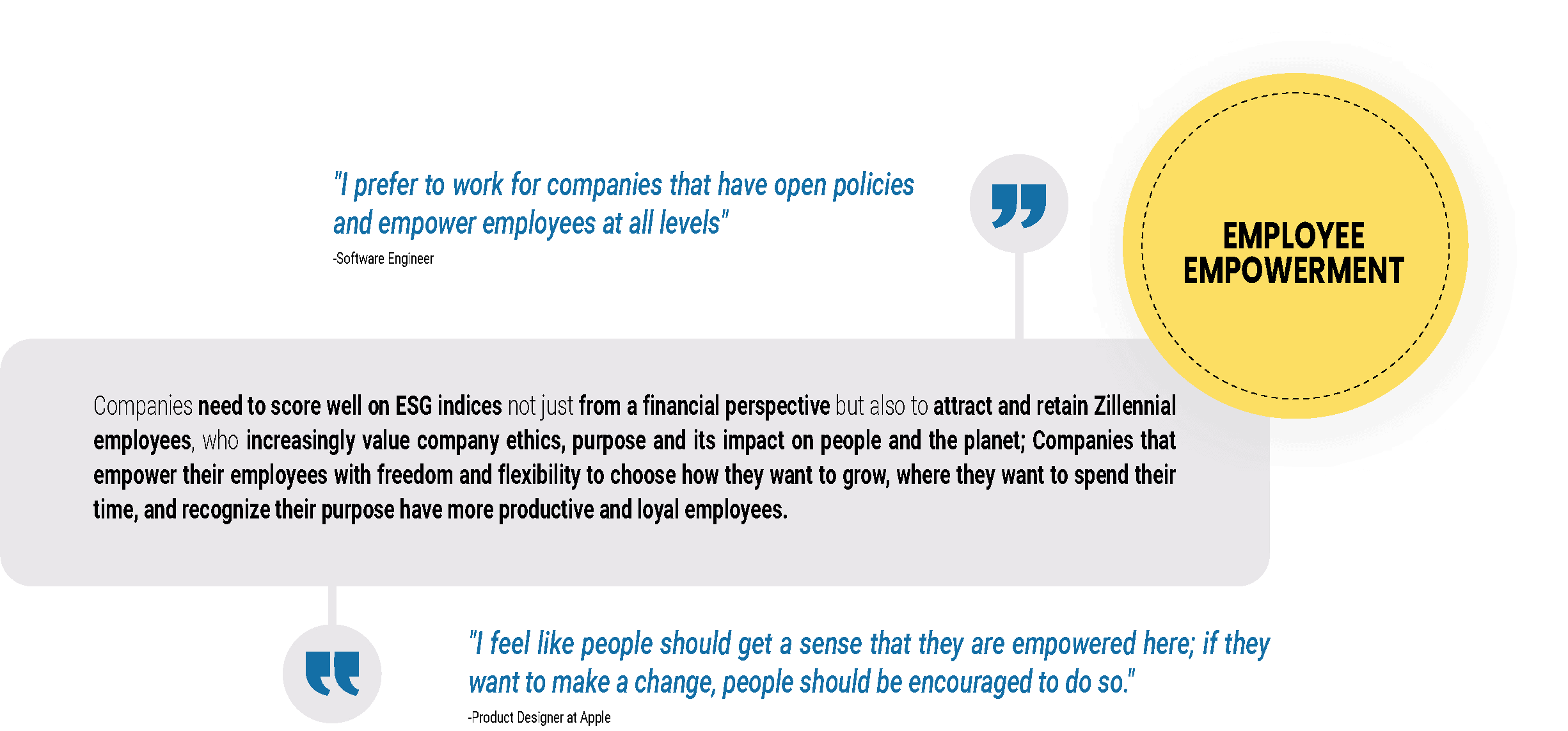
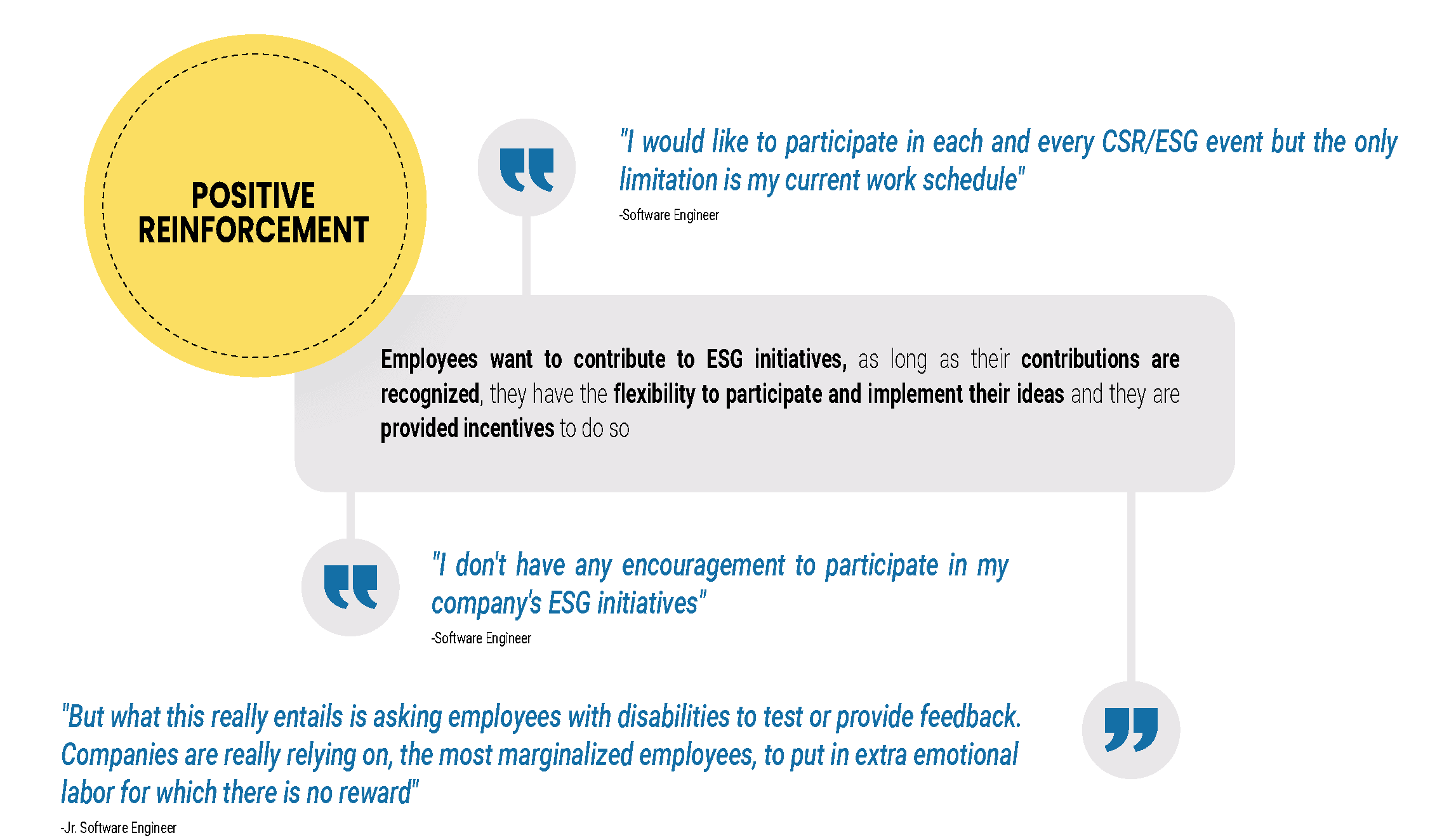
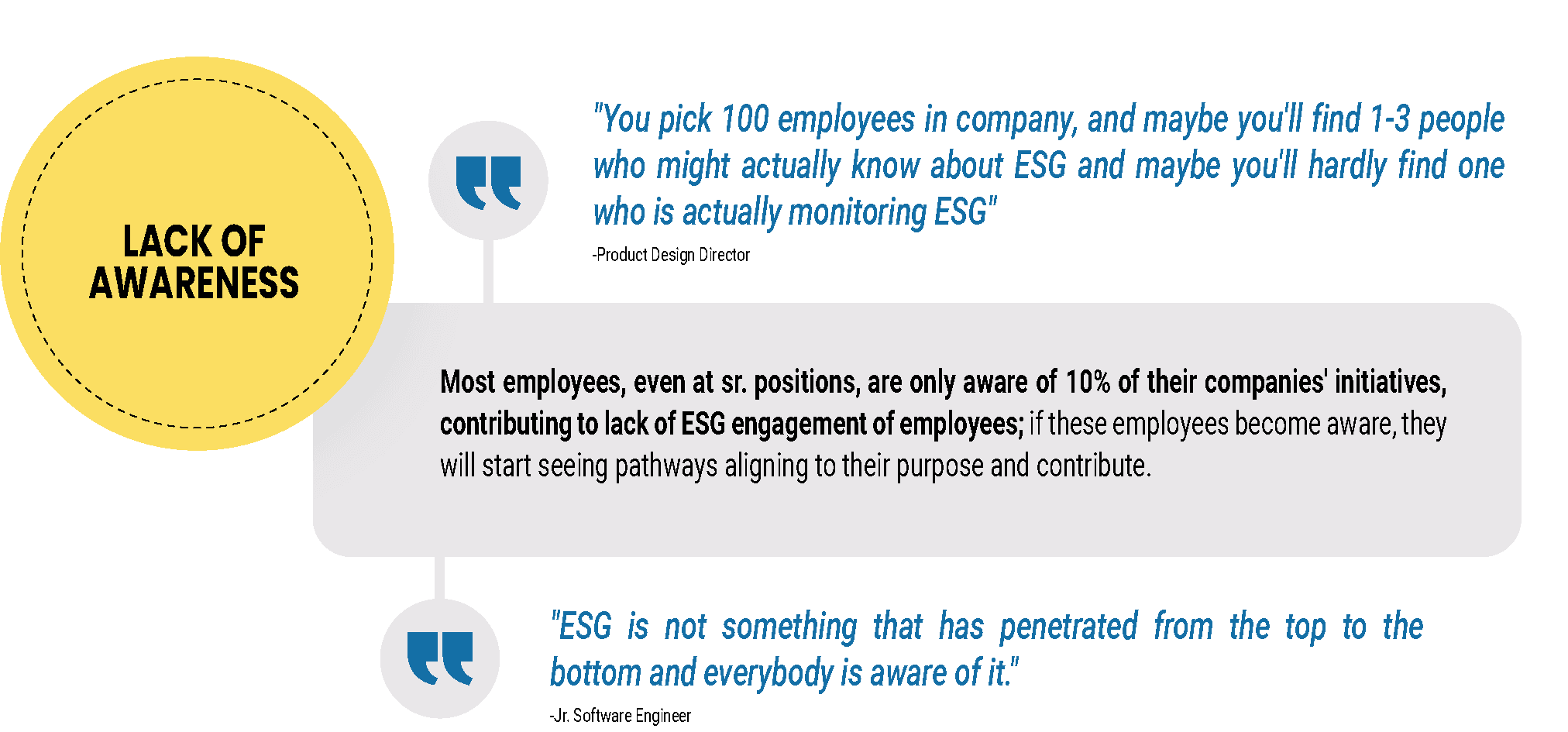
Key Insights
What does the market optimize for?
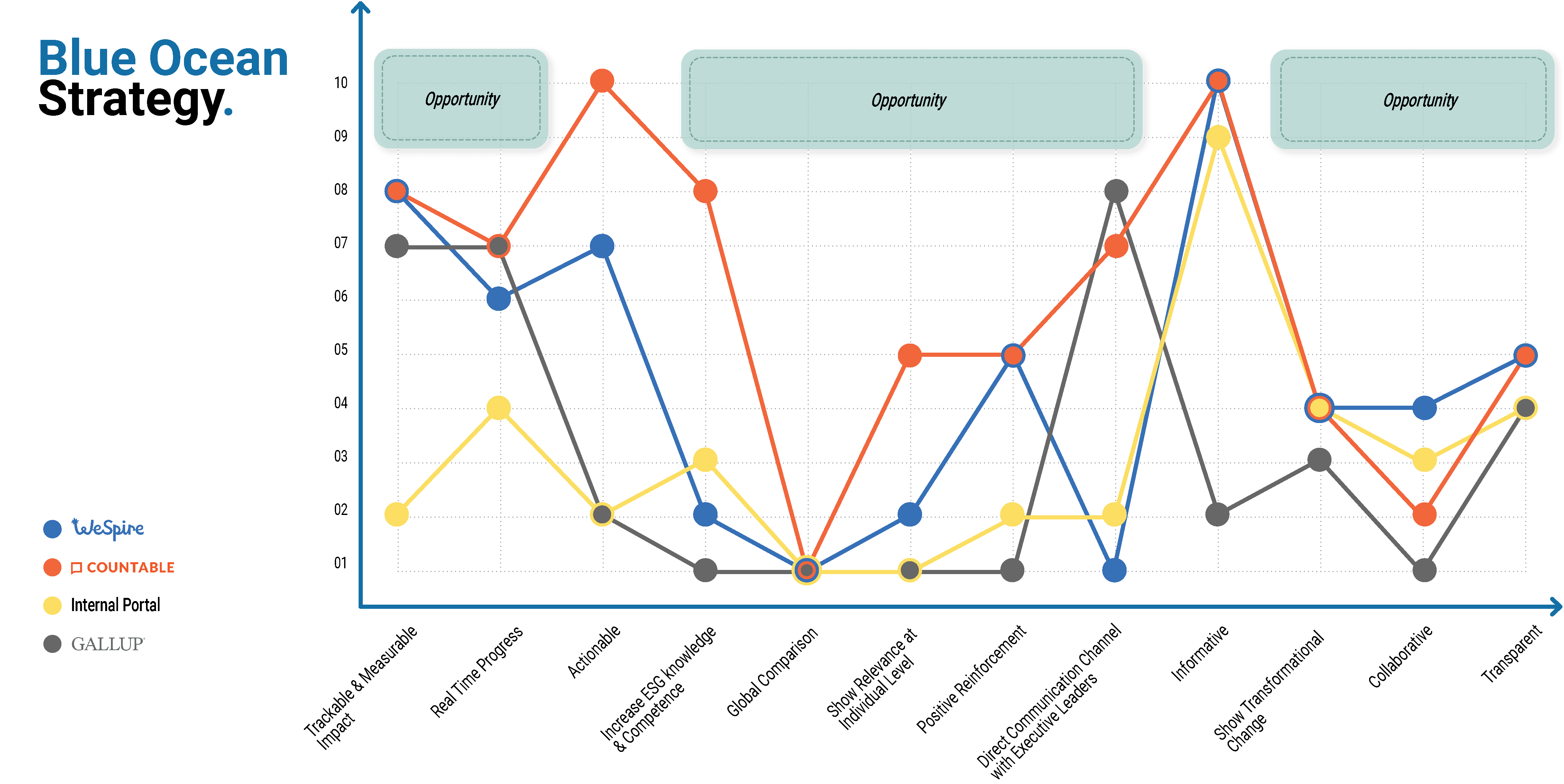
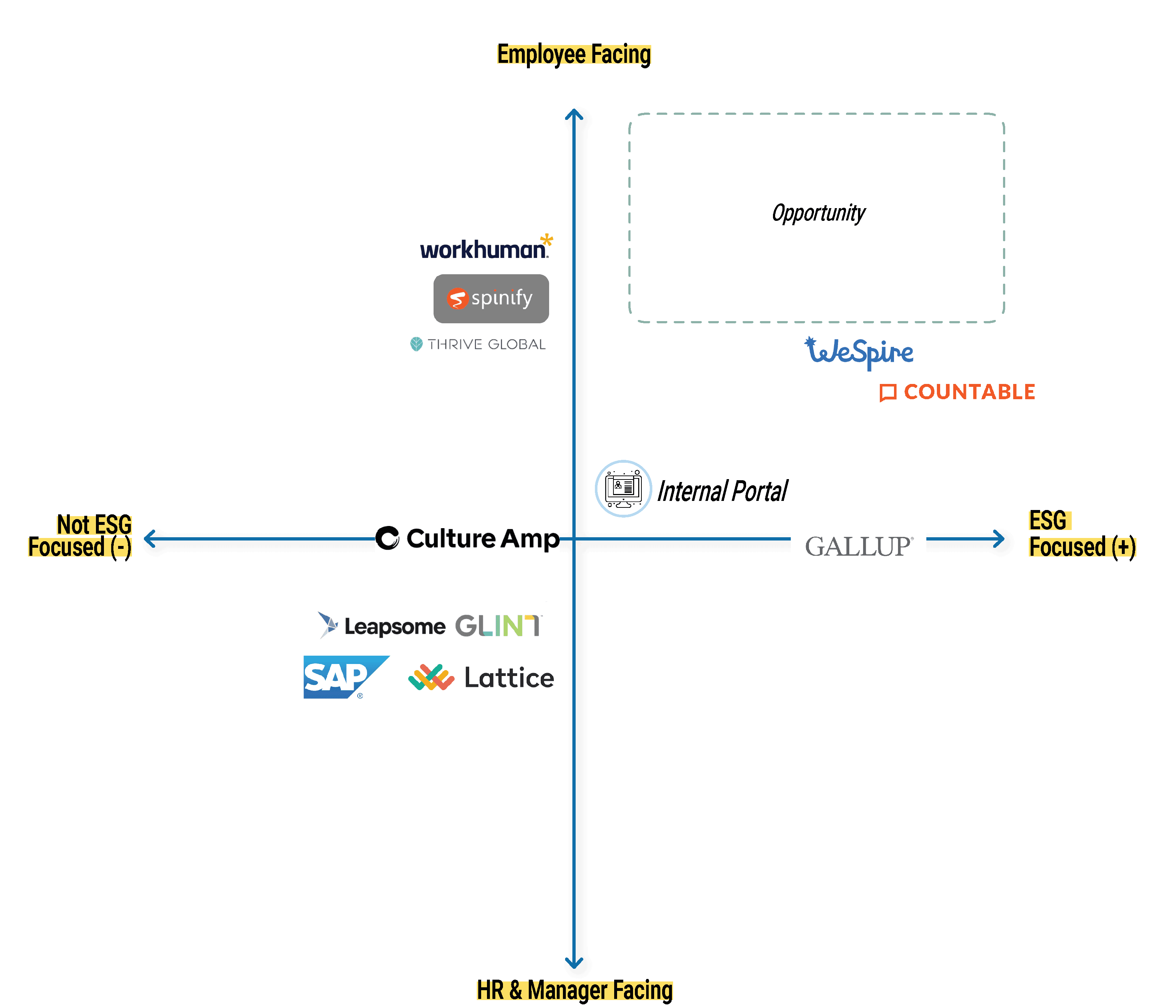
Before ideation, I conducted a competitive positioning analysis to understand where existing solutions focused their energy.
Enterprise ESG platforms are built for compliance and executive dashboards. Employee engagement platforms focus on culture but ignore sustainability. No system closed the loop between corporate intent, employee behavior, and measurable impact — that was the gap.
Who am I designing for?
Research revealed three distinct employee types — each with completely different barriers to participation. Designing one system for all three meant understanding which archetype held the most untapped potential.
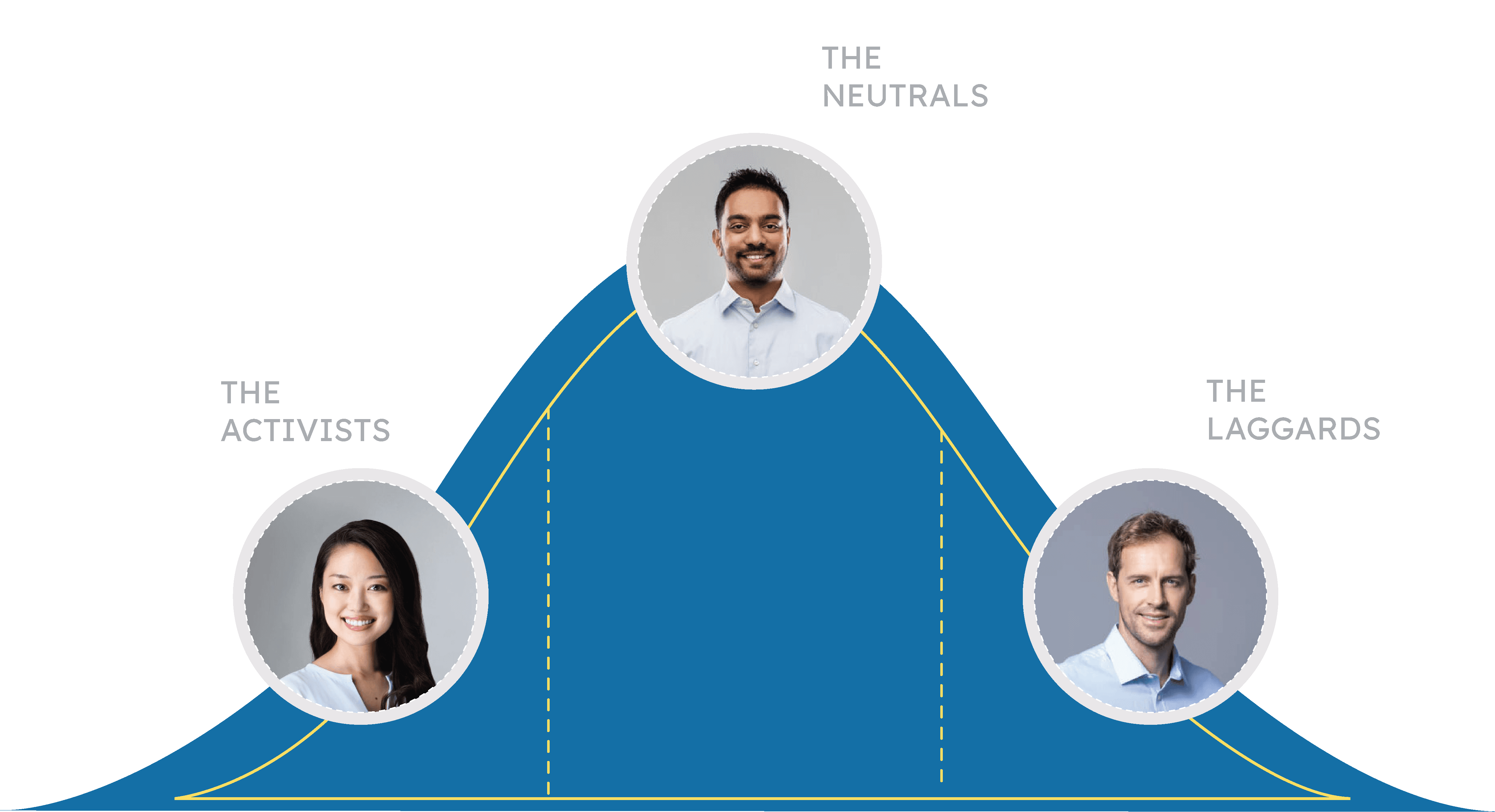
The Activists
Engaged, but unheard. Want recognition and direct leadership access.
The Neutrals
Designed for this archetype The majority. Care but feel overwhelmed, under-informed, and unsupported.
The Laggards
Checked out. Only move when they see collective momentum.
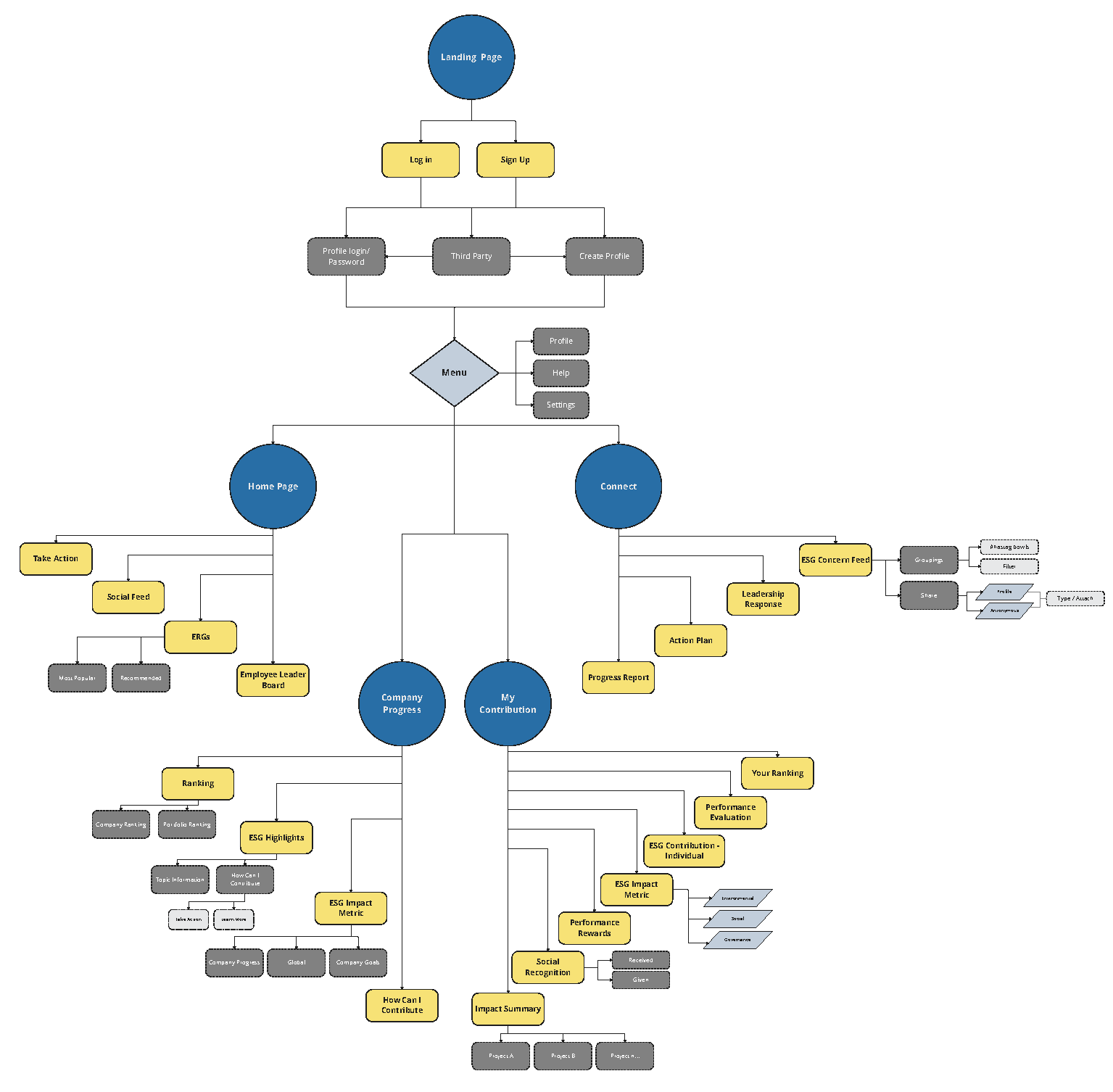
What does the system look like?
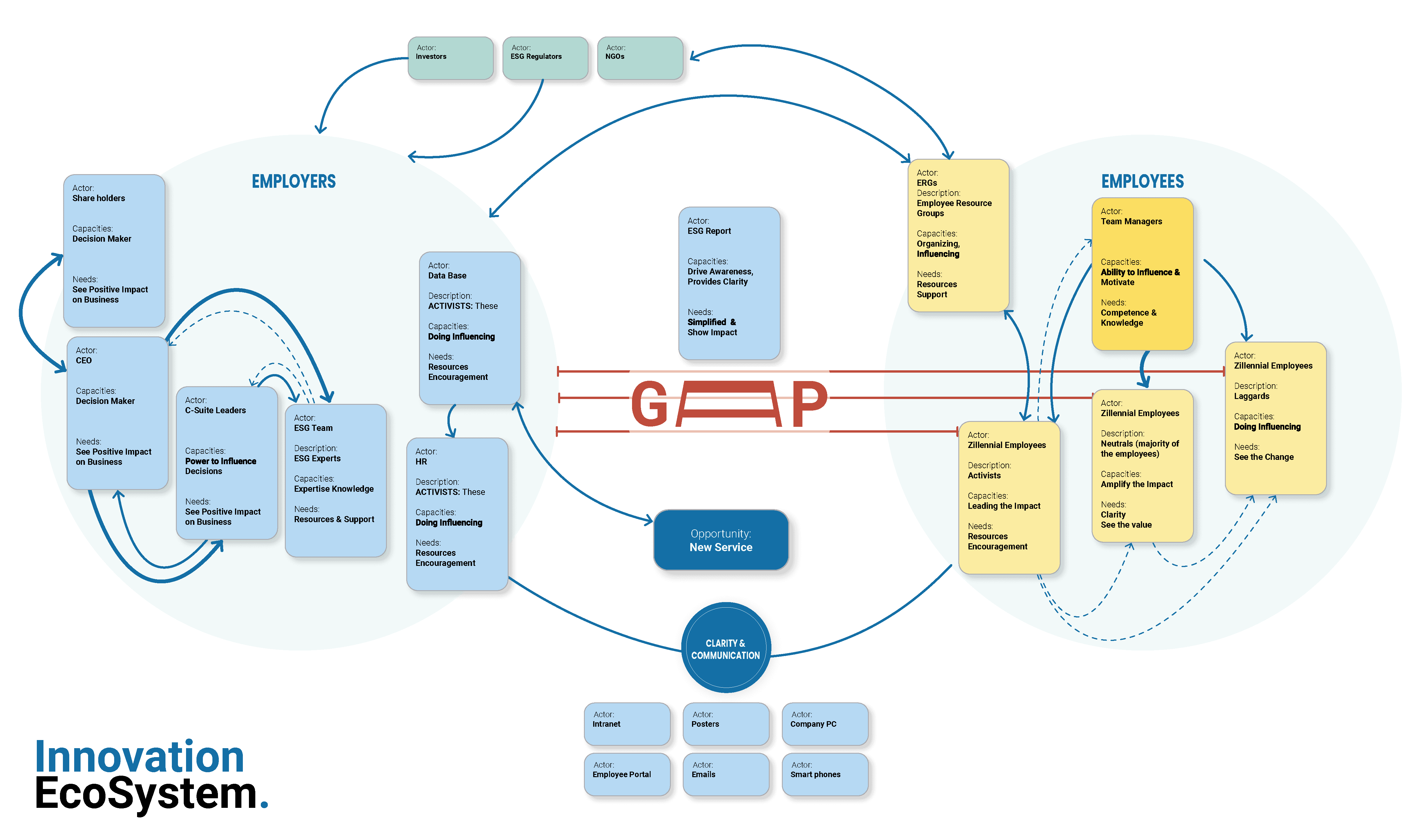
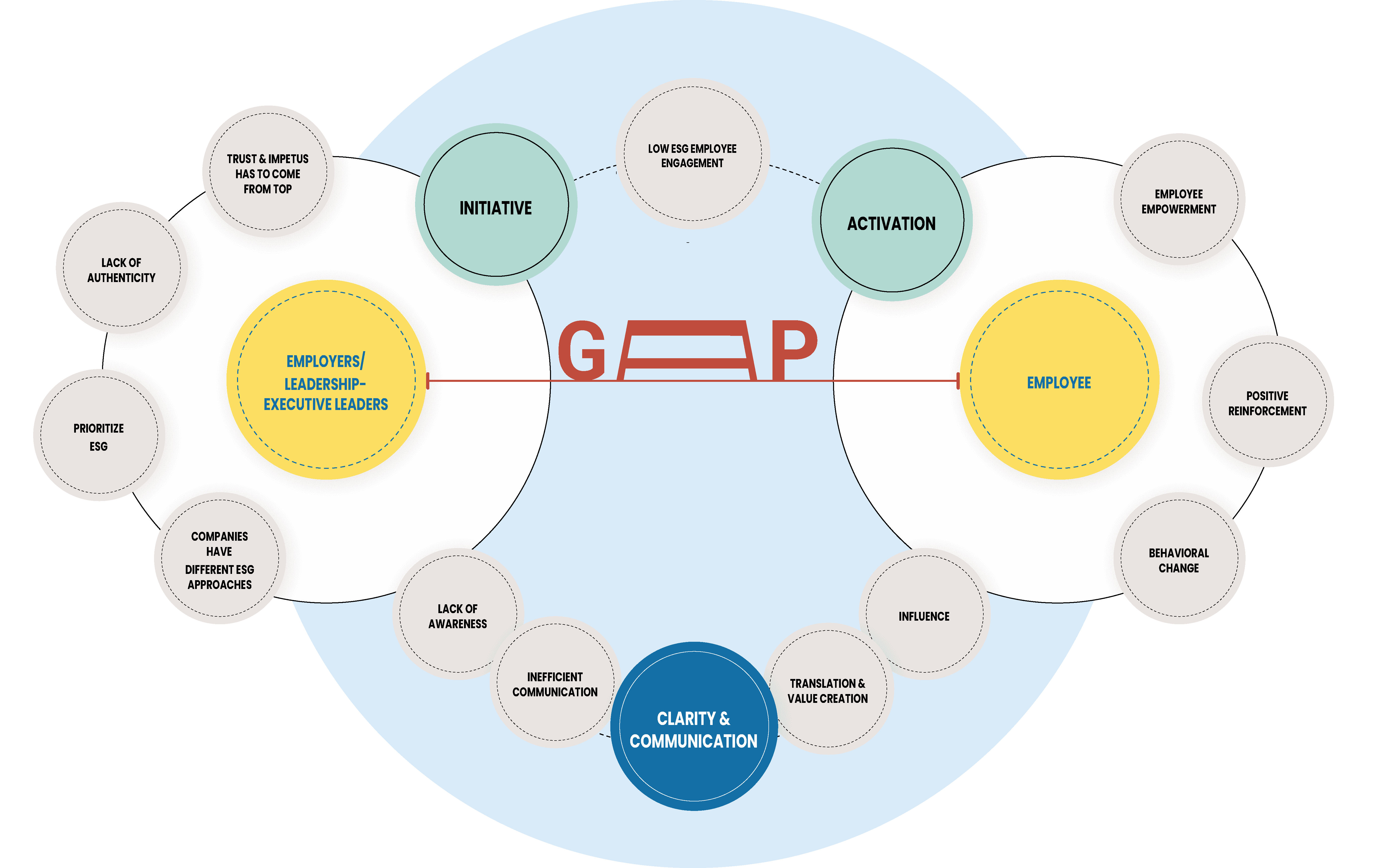
It wasn’t awareness. It wasn’t values. It wasn’t effort. Rather than designing isolated screens, I mapped the entire ecosystem.
Employees are onboarded into sustainability goals in a way that contextualizes their role. Micro-actions are surfaced in alignment with company objectives. Personal dashboards visualize contribution in tangible terms. Team-level metrics create collective accountability. Leadership retains visibility without dominating the experience.
The architecture connects intent to action and action to impact. It is a system designed for participation at scale.
How did the design evolve?
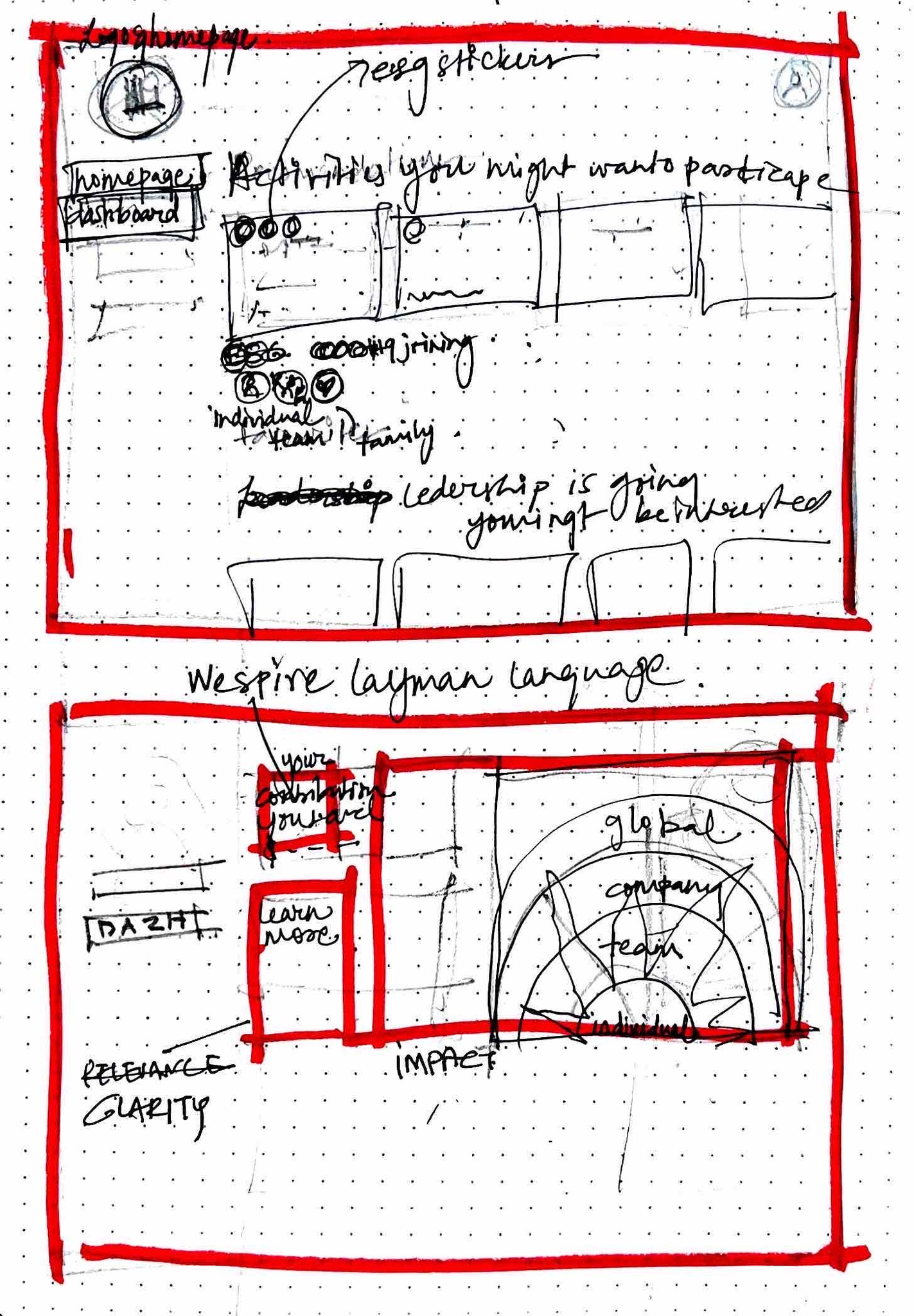
Early explorations leaned toward familiar enterprise UI patterns. The structure was logical but felt distant. Feedback revealed that the experience still centered leadership more than employees.
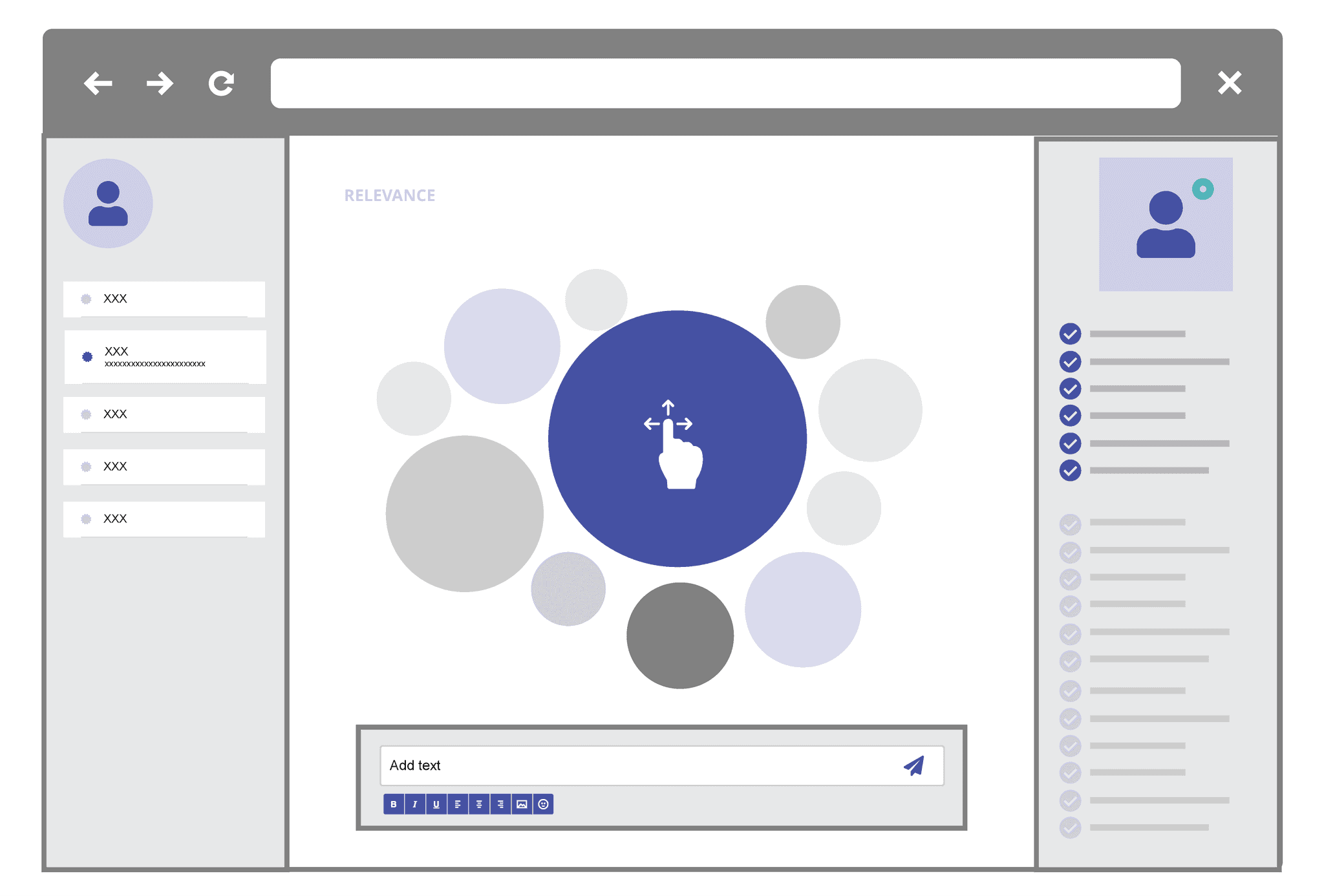
The pivot was intentional. The visual language softened. The hierarchy prioritized individual agency. Micro-contributions became visible. Progress felt cumulative and shared rather than abstract and corporate.
The interface became less about tracking ESG and more about experiencing contribution.
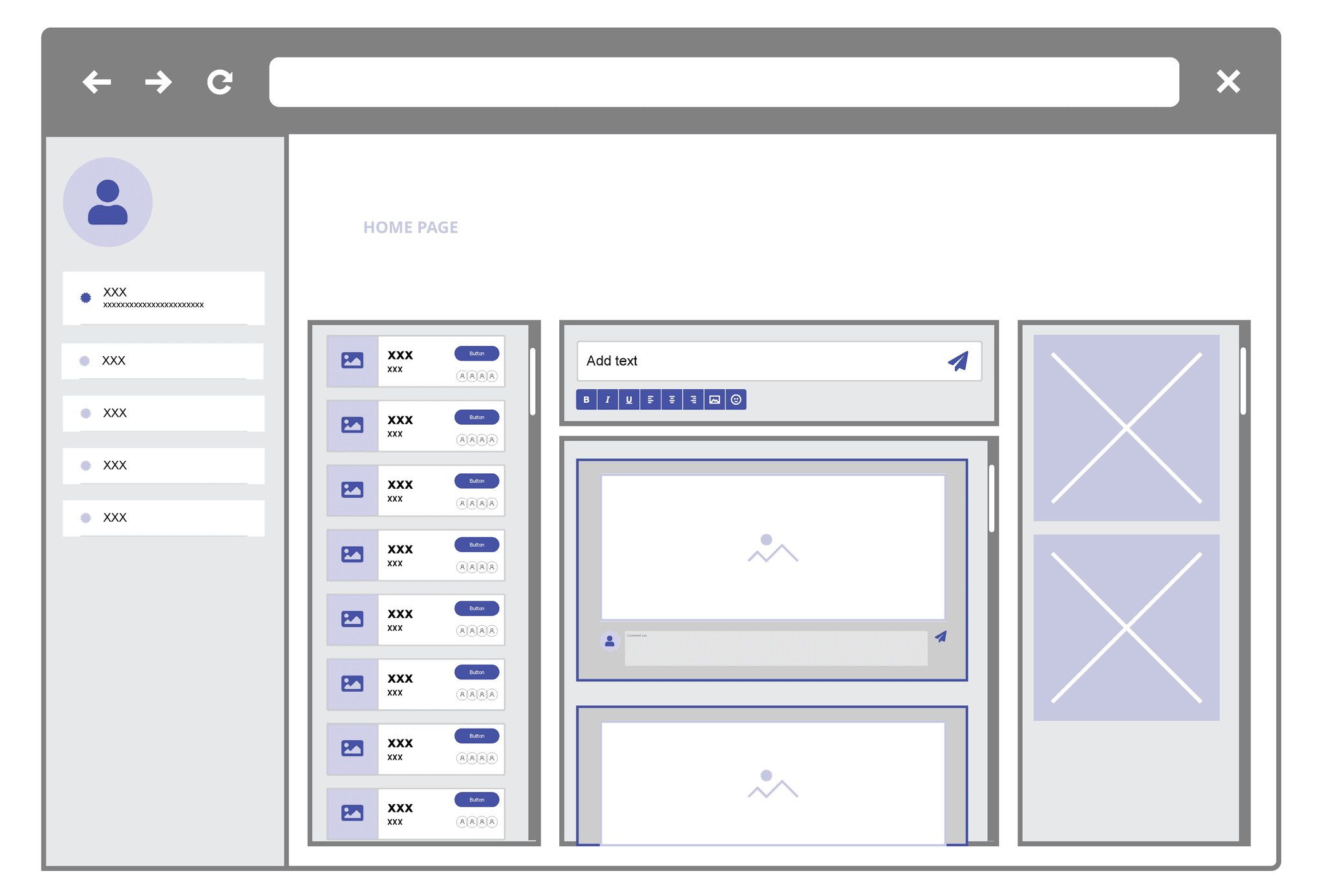
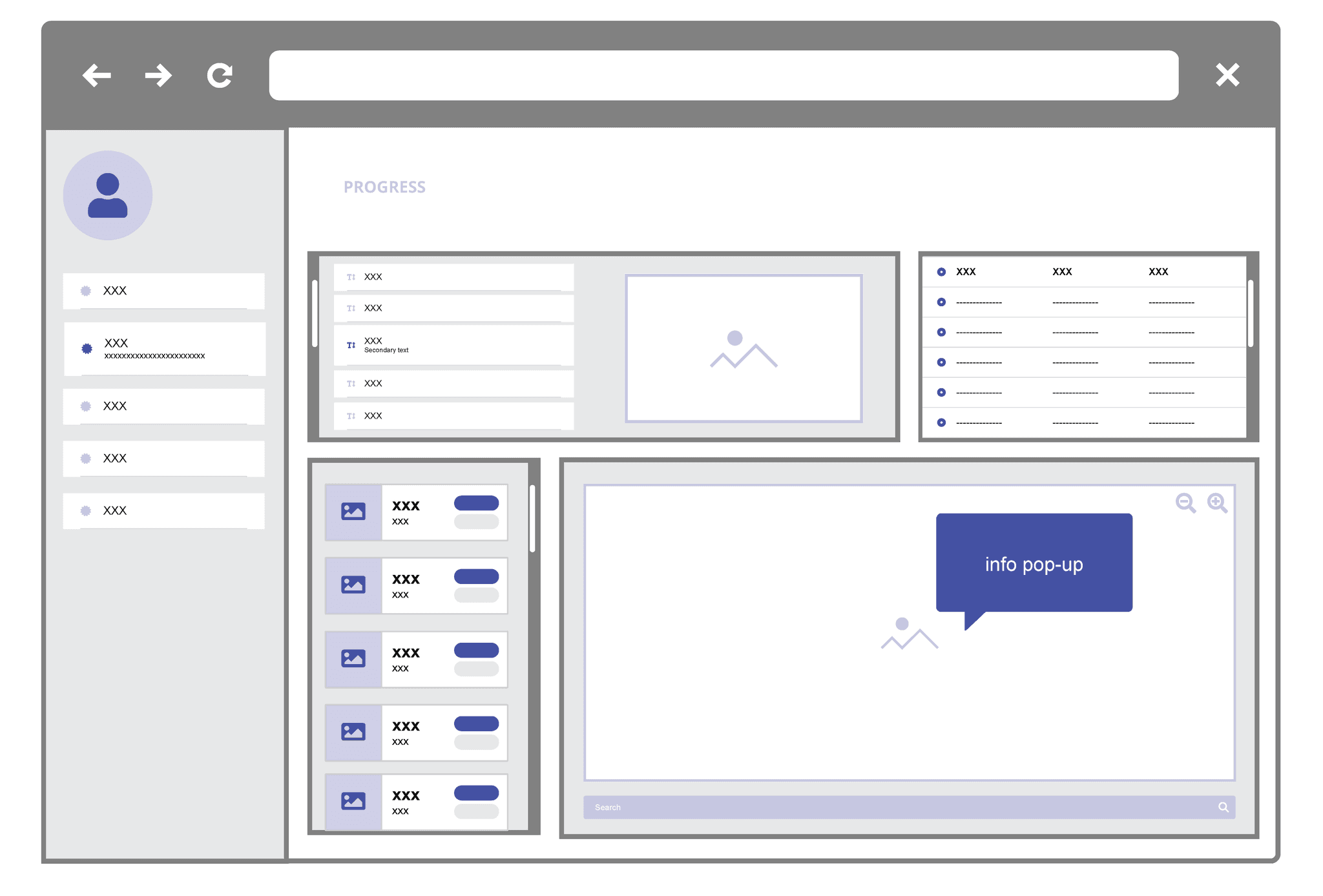
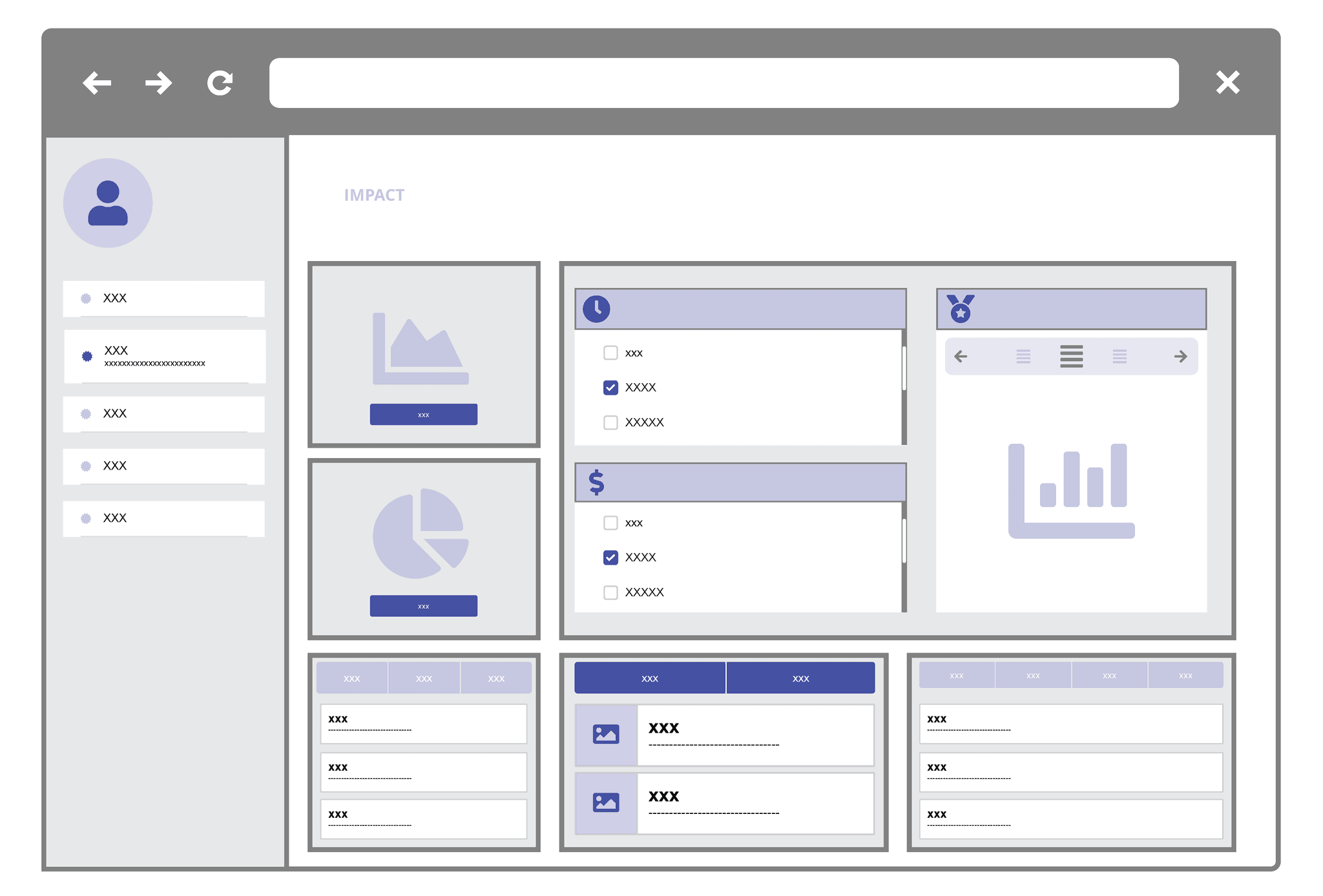
" width="27px"><path d="M 13.503 0 C 5.921 0 0 5.725 0 12.998 C 0 13.142 0 31.296 0.006 31.44 C 0.241 38.503 6.071 44 13.503 44 C 20.935 44 26.765 38.503 26.994 31.44 C 27 31.29 27 13.143 27 12.998 C 27 5.726 21.079 0 13.503 0 Z M 20.604 31.44 C 20.393 35.395 17.402 38.311 13.503 38.311 C 9.604 38.311 6.529 35.317 6.39 31.284 L 6.39 12.998 C 6.39 8.822 9.459 5.689 13.503 5.689 C 17.547 5.689 20.61 8.822 20.61 12.998 C 20.61 13.142 20.61 31.29 20.603 31.44 Z" fill="rgb(0, 0, 0)" height="44px" id="dKGTKkLAb" width="27px"/><path d="M 15.345 7.603 C 15.345 7.753 15.345 26.631 15.338 26.787 C 15.111 30.901 11.884 33.935 7.676 33.935 C 3.468 33.935 0.15 30.82 0 26.625 L 0 7.603 C 0 3.259 3.312 0 7.676 0 C 12.04 0 15.345 3.259 15.345 7.603 Z" fill="rgb(2, 109, 167)" height="33.934701407896924px" id="FM6gJagHV" transform="translate(5.671 4.99)" width="15.345458139764787px"/><path d="M 5.205 10.381 C 8.079 10.381 10.41 8.057 10.41 5.191 C 10.41 2.324 8.079 0 5.205 0 C 2.33 0 0 2.324 0 5.191 C 0 8.057 2.33 10.381 5.205 10.381 Z" fill="rgb(0, 0, 0)" height="10.381357085608514px" id="Pqo0WGqbc" transform="translate(8.34 25.617)" width="10.409558169417892px"/></g></svg>)
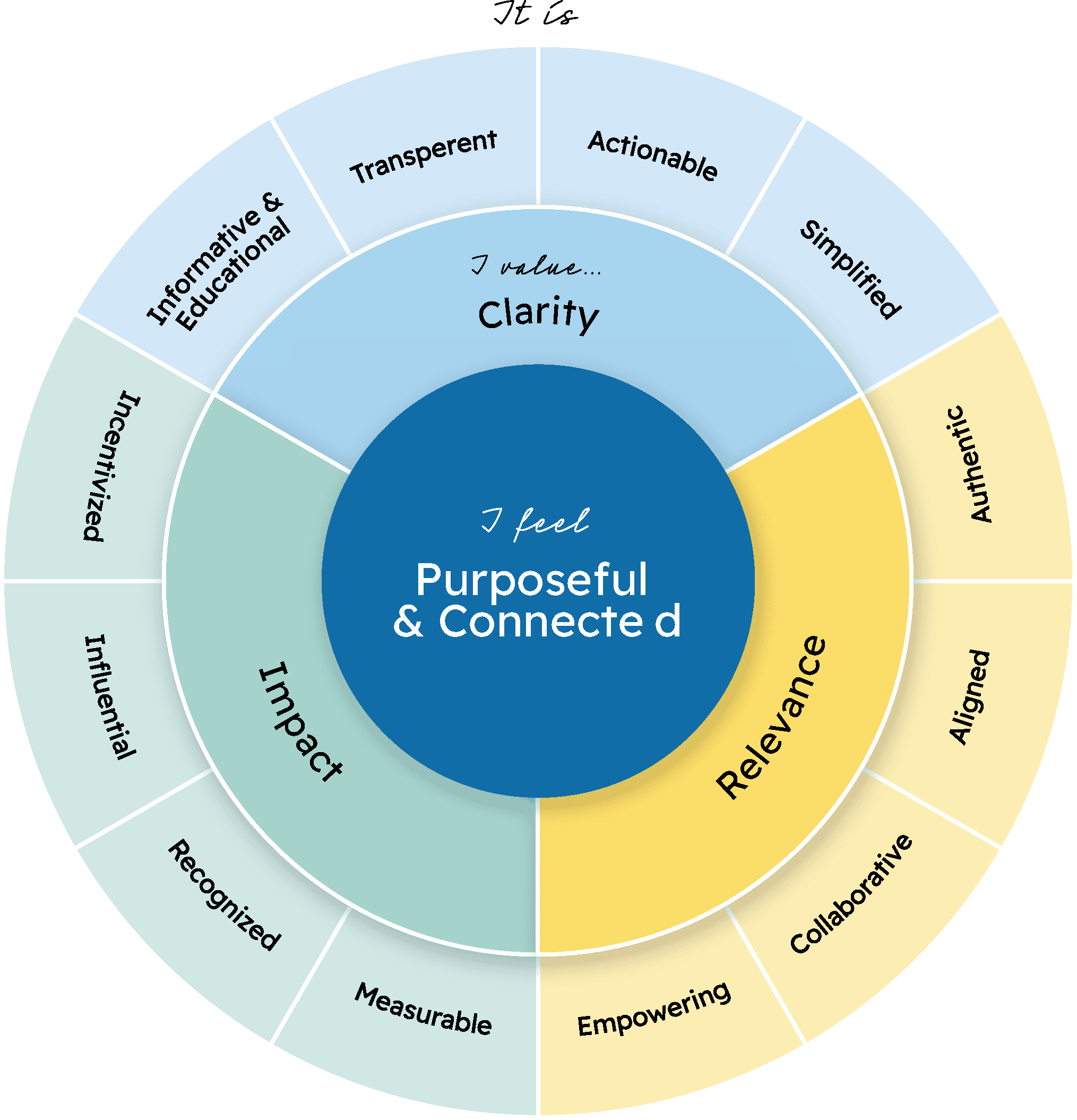
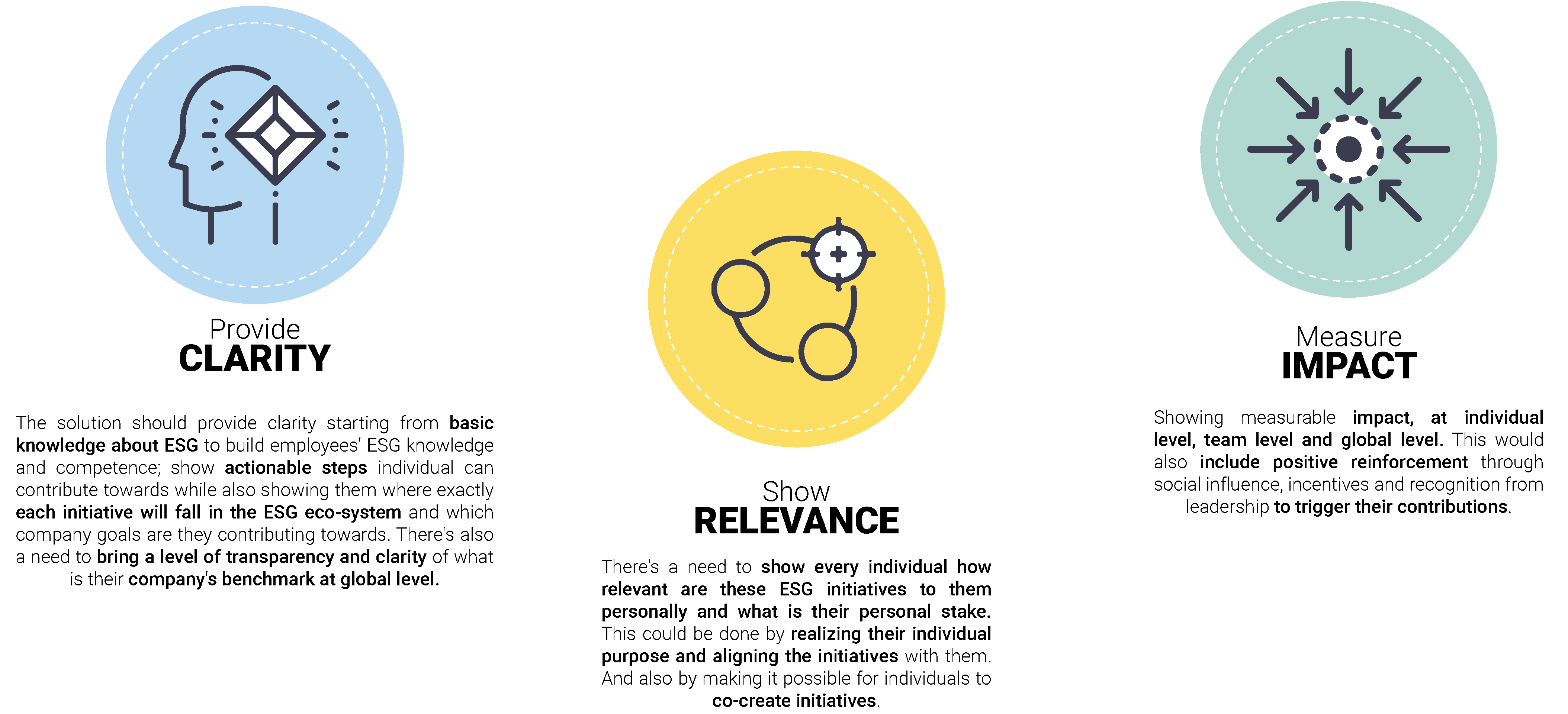
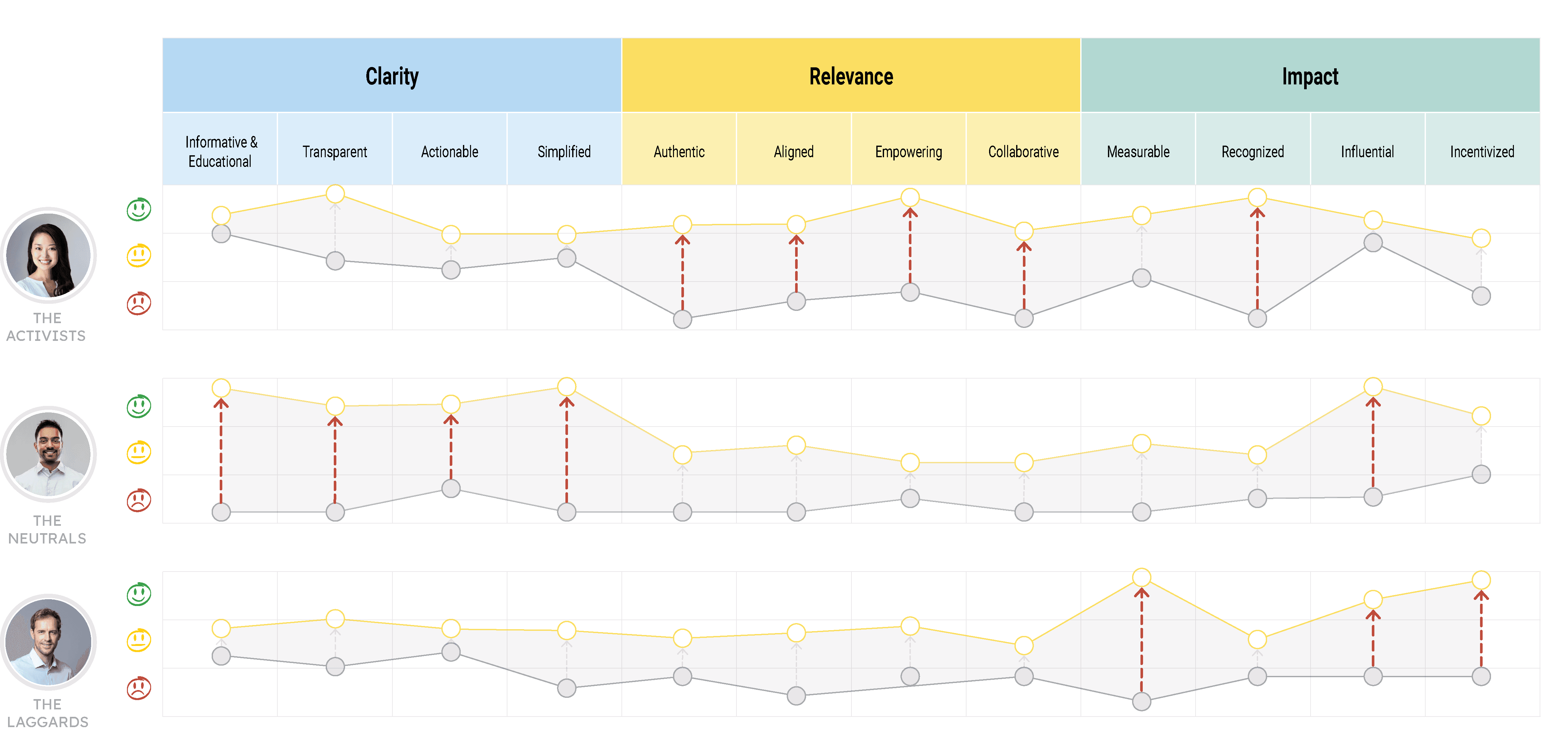
The final solution was anchored in three core pillars: clarity, relevance, and impact.





What impact does this create?
One finding changed the design: cognitive overload from a shared screen led directly to separating Progress and My Contribution into distinct modules.
The journey map shows measurable behavioral progression: Activists gain the visibility they lacked, Neutrals move from passive awareness to consistent participation, and Laggards engage when peer momentum and recognition become visible.
01 — The Real Problem Was Never Awareness
Most employees knew about ESG goals and still didn't act. Reframing from "communicate better" to "make it personally relevant" unlocked everything. The most valuable thing a designer can do is resist the obvious solution long enough to find the real one.